 Image unavailable
Illustrative image — products may vary.
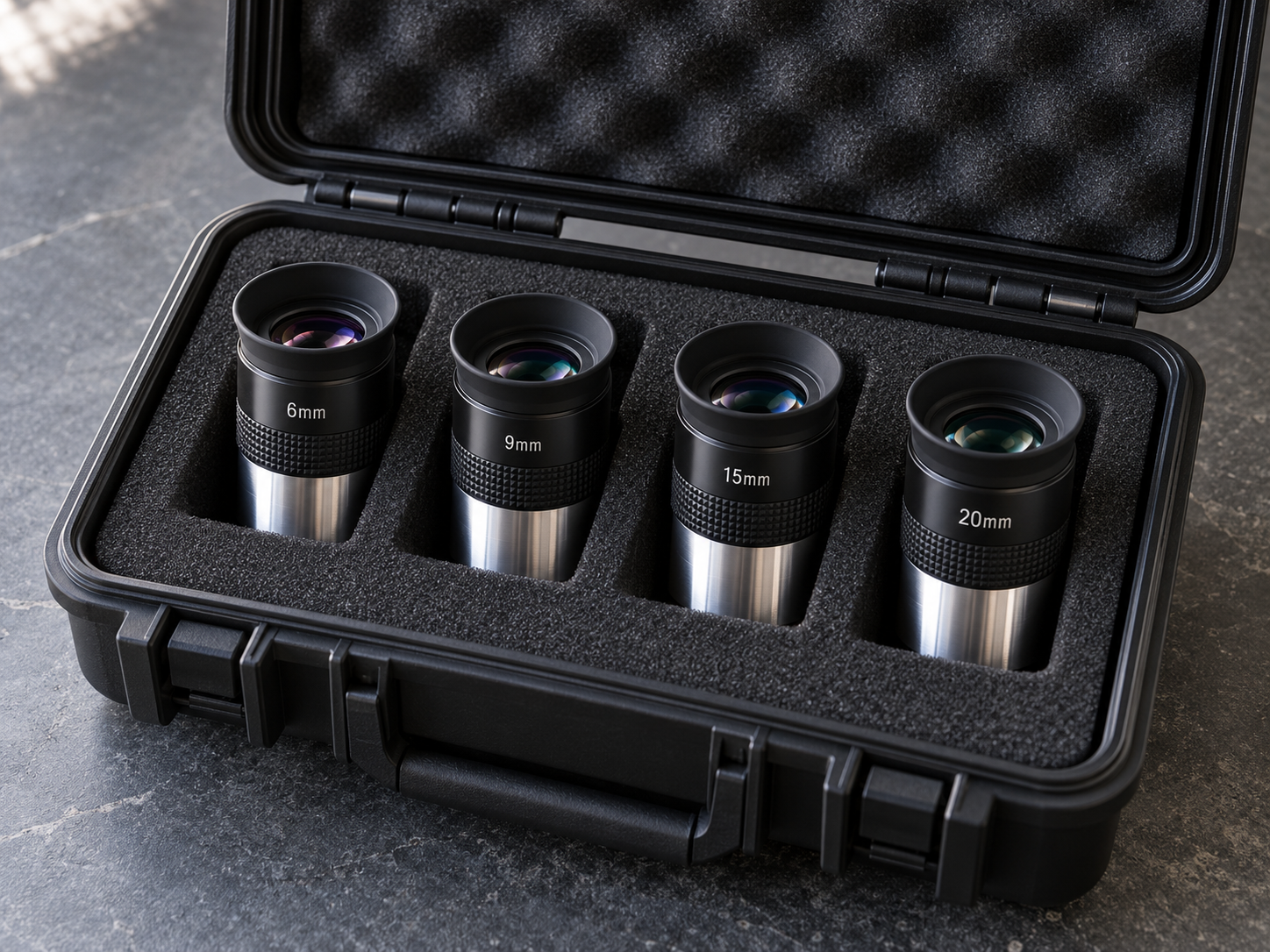
Telescope Eyepiece Set: Different views through the telescope they own
A choice of eyepiece focal lengths for an existing telescope, with fit and useful magnification checked before buying.
Ad: GiftAim earns commission or fees from qualifying purchases and sign-ups through links on this page, at no extra cost to you. How we’re funded.
Ask what is missing from their case
For an observer who already owns a telescope, an eyepiece set may open up useful viewing choices. Start with what is missing, rather than the largest case. They may prefer one requested eyepiece to several that repeat the views they already have.
Barrel size and focal length are different
Barrel diameter describes the part that fits into the telescope; focal length describes a different optical property. Common barrels are 1.25 and 2 inches, with 0.965-inch fittings on some older equipment. Confirm the actual holder and any adapter, then compare focal lengths marked in millimetres.
Work out useful magnification
Divide the telescope's focal length by the eyepiece's focal length to calculate magnification. A 1,000mm telescope with a 20mm eyepiece gives 50x. Shorter eyepieces raise magnification, but the telescope, conditions and target limit what remains useful. An extravagant power claim doesn't create more visible detail.
Count useful eyepieces, not every accessory
Count the focal lengths you'll actually use, rather than every filter and cap. Eye relief describes how far the eye sits from the lens while seeing the view; comfort with glasses can matter. A Barlow lens multiplies magnification and can duplicate existing combinations. Coloured or Moon filters are separate extras, not more eyepieces.
Confirm barrel fit, any required adapter and the telescope maker's limits.
Compare comfortable viewing and practical focal lengths before kit piece count.
Check whether a protective case and caps are supplied.
For someone still learning the sky without a telescope, a star chart planisphere makes a different, simpler starting point.