 Image unavailable
Illustrative image — products may vary.
Puzzle Board: Let the puzzle stay together between sessions
A puzzle board gives an unfinished jigsaw a surface of its own, so clearing the table need not mean clearing the picture.
Ad: GiftAim earns commission or fees from qualifying purchases and sign-ups through links on this page, at no extra cost to you. How we’re funded.
Start with the puzzle's actual measurements
Piece capacity is a rough guide. A board advertised for 1,000 pieces may be too small for a particular 1,000-piece picture. Compare the finished puzzle with the clear working area inside the frame, then decide how much sorting space they need.
Check the board's outside size as well: it must fit both the table and wherever they plan to keep it. A rigid board retains a flat surface; a roll-up puzzle mat offers a different, flexible way to put a project away.
Choose useful extras
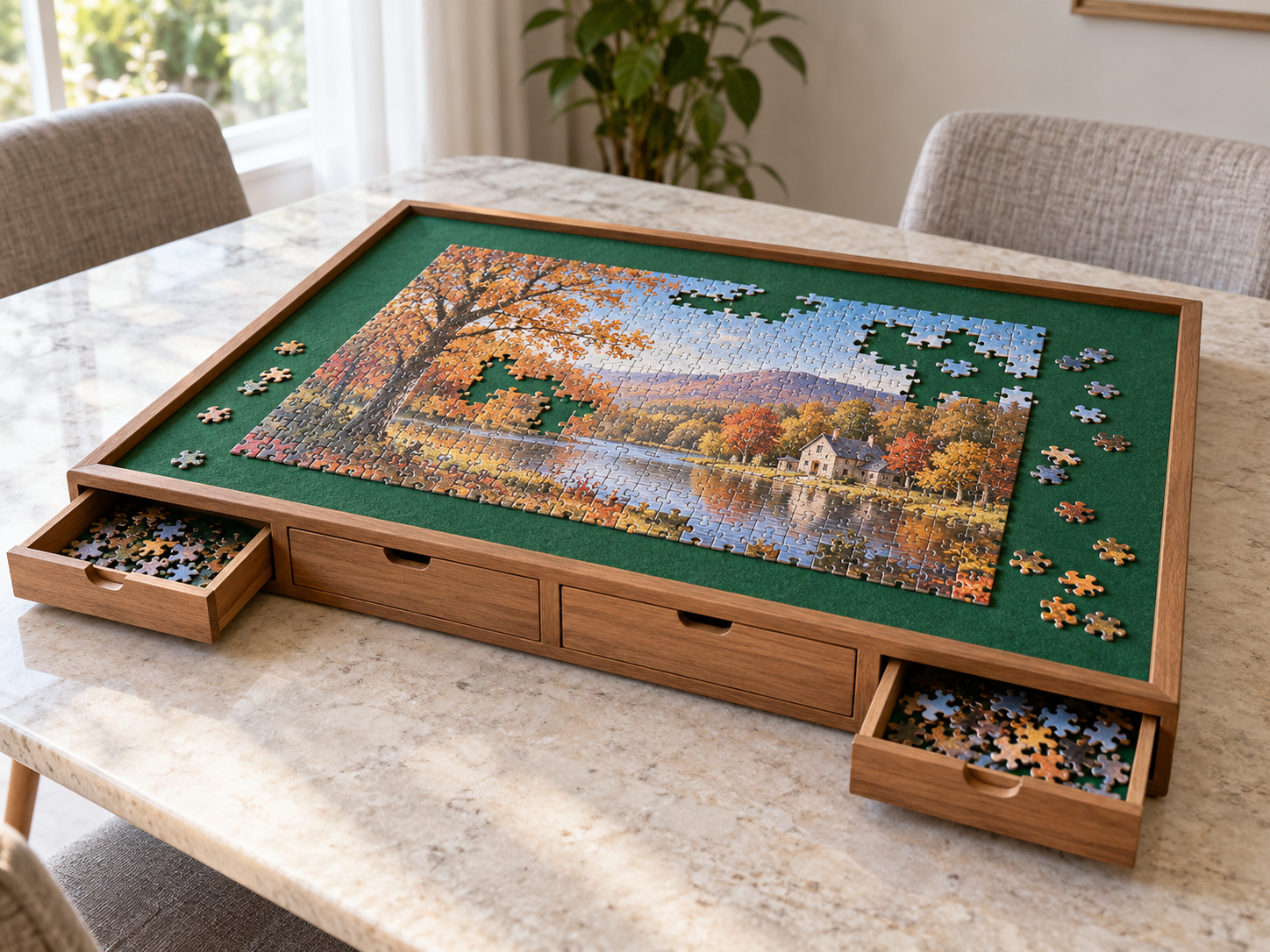
Drawers and removable trays give loose pieces somewhere to wait. Their closures matter when moving the board, and a dust cover is not necessarily a restraint for vertical carrying. Use the manufacturer's handling instructions rather than assuming a covered puzzle can be stood on end.
A plain flat board suits a comfortable existing table.
Tilting can change the viewing position, provided the surface keeps the pieces from slipping.
Rotation needs enough surrounding room, particularly with drawers open.
Felt can hold pieces in place but may resist moving a large assembled section. Smooth surfaces make sliding easier, with less grip when tilted. The right choice depends on their way of puzzling, not the number of features on the listing.
Consider the weight of the whole setup
They will be moving a board with a puzzle on it, not an empty accessory. Look at its weight and whether they can reach both sides comfortably. Most boards do not include a puzzle; a suitably sized jigsaw is a separate gift if they need one.