 Image unavailable
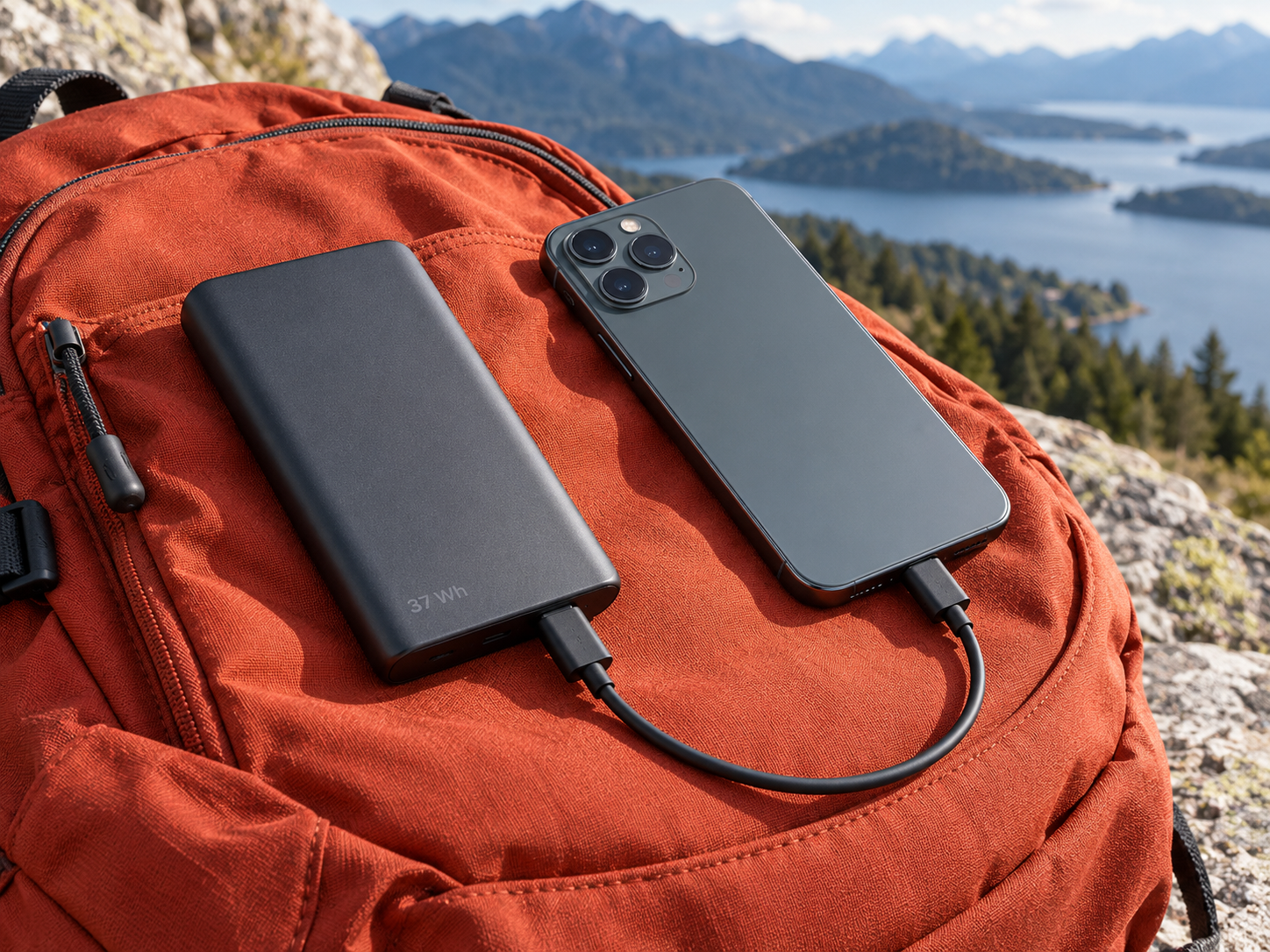
Illustrative image — products may vary.
Portable Power Bank: Some charge in reserve for the next stop
A power bank keeps stored energy available for compatible devices away from a socket. The right present balances useful output, suitable connections and the weight they want to carry.
Ad: GiftAim earns commission or fees from qualifying purchases and sign-ups through links on this page, at no extra cost to you. How we’re funded.
Start with what they need to charge
A power bank stores energy; a plug adaptor changes a connection at a socket. Find out the recipient’s device model and charging requirements before comparing battery capacity. A smaller pack they carry can be more useful than a heavy one left at home.
A capacity in mAh is not a promise of a fixed number of complete phone charges. Charging losses and the device’s own activity affect the result. Output in watts and the supported charging system determine which devices it can supply usefully, particularly for tablets or laptops.
Follow the connection from end to end
Establish which sockets recharge the bank and which charge a device. USB-C describes the connector shape rather than guaranteeing every output. The bank, cable and device must support the intended charging arrangement together. Built-in leads need the correct end for their equipment.
A travel tech organiser can keep suitable leads ready. For a destination’s wall sockets, a universal travel adaptor does a different job and cannot replace stored battery power.
Think about the day it will be carried
Size, weight and an understandable charge indicator can be more useful than headline capacity. For camping or hiking, add a way to protect the pack from water and damage and a realistic recharging plan. It should not become their sole emergency communication or navigation provision.
Check the rules for the actual flight
Carry power banks in the cabin, never in hold baggage. Protect them from damage and short circuits, keep them accessible and remove them if cabin luggage is taken for the hold. Use the marked watt-hour rating and the airline’s current rules to establish what may be carried.
Current CAA guidance limits passengers to two power banks and says not to recharge them on board. Check the airline before using one to charge a device in flight. Packs above the ordinary 100 Wh threshold need particular attention and may require approval; a large capacity is not evidence of permission.
Choose a reputable supplier and check the manufacturer’s instructions and recall notices. A swollen, damaged, overheating or recalled battery should not be used or carried on an aircraft.