 Image unavailable
Illustrative image — products may vary.
Metronome: A clear pulse to practise alongside
A metronome supplies a regular beat at a chosen tempo. It can be a useful practice companion when the recipient wants a separate device with a sound, display and controls they enjoy using.
Ad: GiftAim earns commission or fees from qualifying purchases and sign-ups through links on this page, at no extra cost to you. How we’re funded.
A separate beat for their practice
A metronome gives the musician a steady pulse to work with. The selected tempo is normally shown in beats per minute, or BPM. It provides a reference; it doesn't assess the performance or guarantee better timing.
Ask whether they want a separate metronome before choosing one. They may already like an app or the metronome built into their keyboard or tuner. If they do want one, the important question is how they'll follow the beat while they play.
Choose how it looks, sounds and works
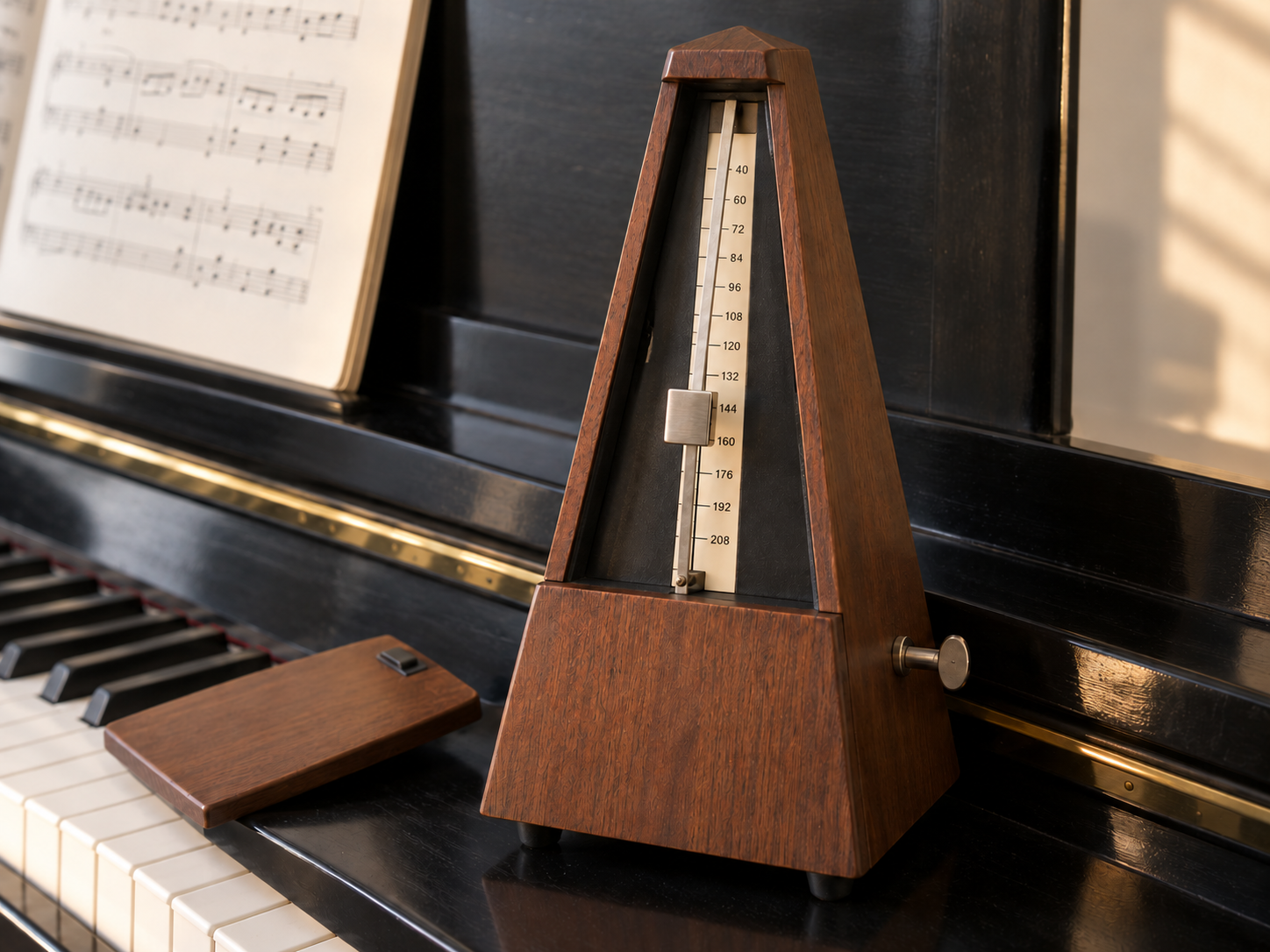
A traditional wind-up model uses a moving pendulum and an audible tick without needing batteries. It can suit someone who wants that visible movement in a fixed practice space. Follow the maker's instructions, including where it should sit.
A digital design may be easier to carry and can offer features such as volume adjustment, a visual beat display or headphones. Those features vary, so check the actual model rather than buying on the strength of a picture.
Tempo range: does it cover the speeds they want to practise?
Beat and rhythm options: check any accented beats or smaller beat divisions they need, and whether setting them is straightforward.
Sound or visual cue: choose something they can follow from their playing position. Check the headphone socket if quiet practice matters.
Power: find out whether it winds up, takes replaceable batteries or recharges, and what is supplied.
For piano, think about a stable position within sight of the player. A guitarist or ukulele player travelling to lessons may prefer a small device that fits with their music.
For Christmas or a birthday, choose it for a practice need they've mentioned. Timing and pitch are different checks: if they want help tuning a guitar or ukulele, see the clip-on instrument tuner instead.