 Image unavailable
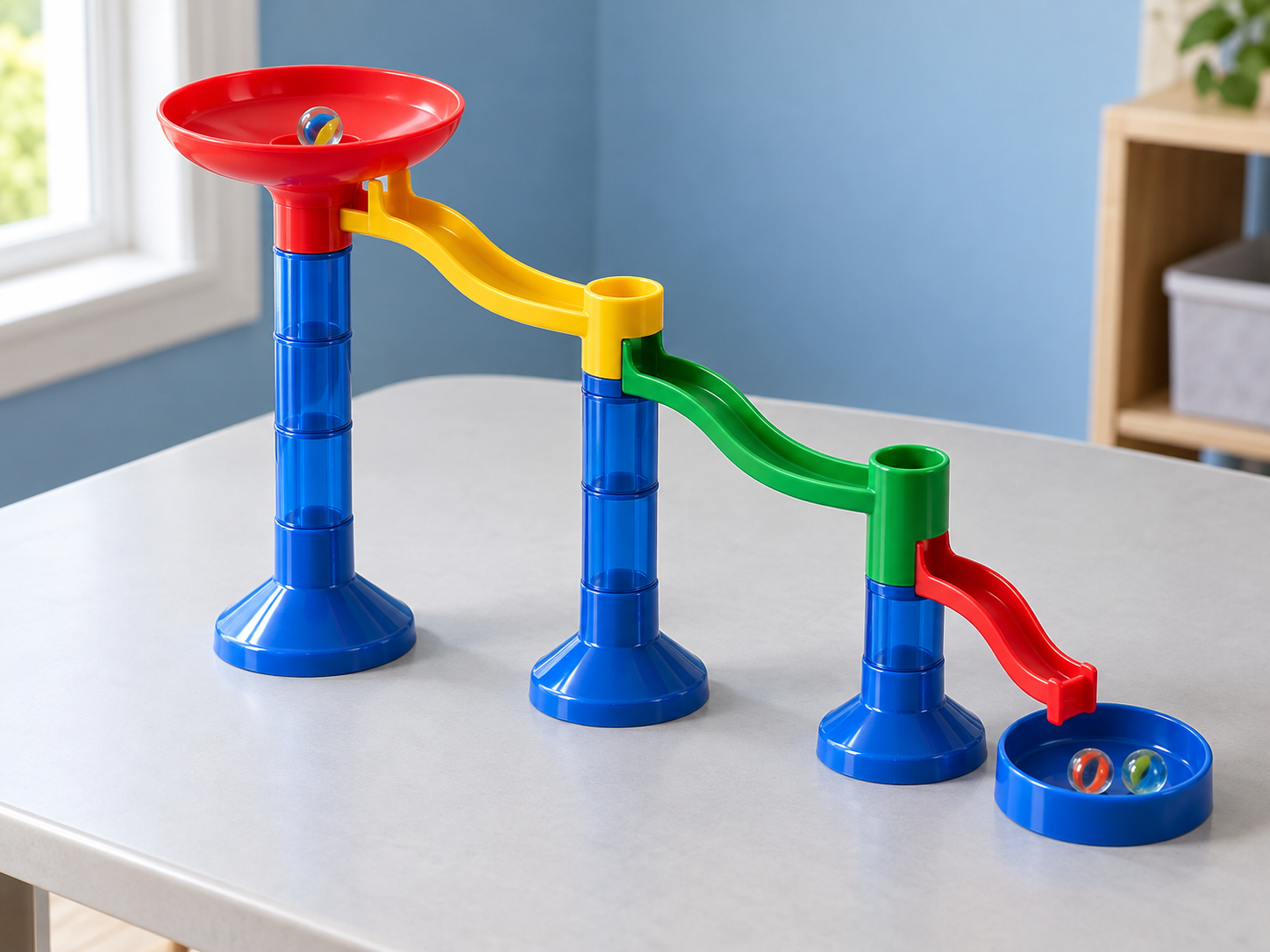
Illustrative image — products may vary.
Marble Run Set: A different route on every rebuild
With a marble run, making the track is part of the game. Look for a complete system whose ball size, joins and building demands suit the child and the space available.
Ad: GiftAim earns commission or fees from qualifying purchases and sign-ups through links on this page, at no extra cost to you. How we’re funded.
Choose the building challenge
Watching the first ball make it to the end is a good reward for a carefully built track. The longer-lasting appeal comes from changing it: a steeper section here, a new junction there, then another test.
Runs range from simple chunky channels to detailed modular systems. Compare how the child will put the parts together, as well as the finished height. Follow the exact product’s age recommendation; a large-looking structure can still contain small balls and fiddly pieces.
Establish what the box can do on its own
Look for a complete starter rather than an add-on if this is their first run. Bases, supports, connecting tracks and balls all matter. An exciting-looking mechanism can be disappointing when it needs a separately bought starter or power source.
For an existing collection, get the precise system name. Different junior and standard lines are not automatically compatible, and an electronic component may add battery or setup requirements. Treat the maker’s named compatibility list as the useful guide.
A short track can be enough
The child needs somewhere level to build and room to retrieve the balls. A kitchen table may work well for a small run; a sprawling layout needs space where it can stay without being knocked. Check the dimensions of an example build, rather than judging by the packaging.
Printed starter layouts can help them get going. If the guidance is online, establish whether that fits the screen-free play you have in mind. Allow for a grown-up’s help with a first layout without choosing a system that the child cannot comfortably rebuild.
Useful checks before wrapping:
Are balls and all essential supports included?
Does any powered part need batteries bought separately?
Can loose pieces be stored together after play?
A run invites testing and tinkering; it is not a promise of a particular learning outcome. If they would rather build houses and towers, magnetic building tiles offer a different starting point.