 Image unavailable
Illustrative image — products may vary.
Logic Puzzle Book: A few clues, a pencil and something to work out
A logic puzzle book offers fresh paper-and-pencil challenges, chosen around the puzzles they enjoy and pages they find comfortable to use.
Ad: GiftAim earns commission or fees from qualifying purchases and sign-ups through links on this page, at no extra cost to you. How we’re funded.
Look at a sample puzzle
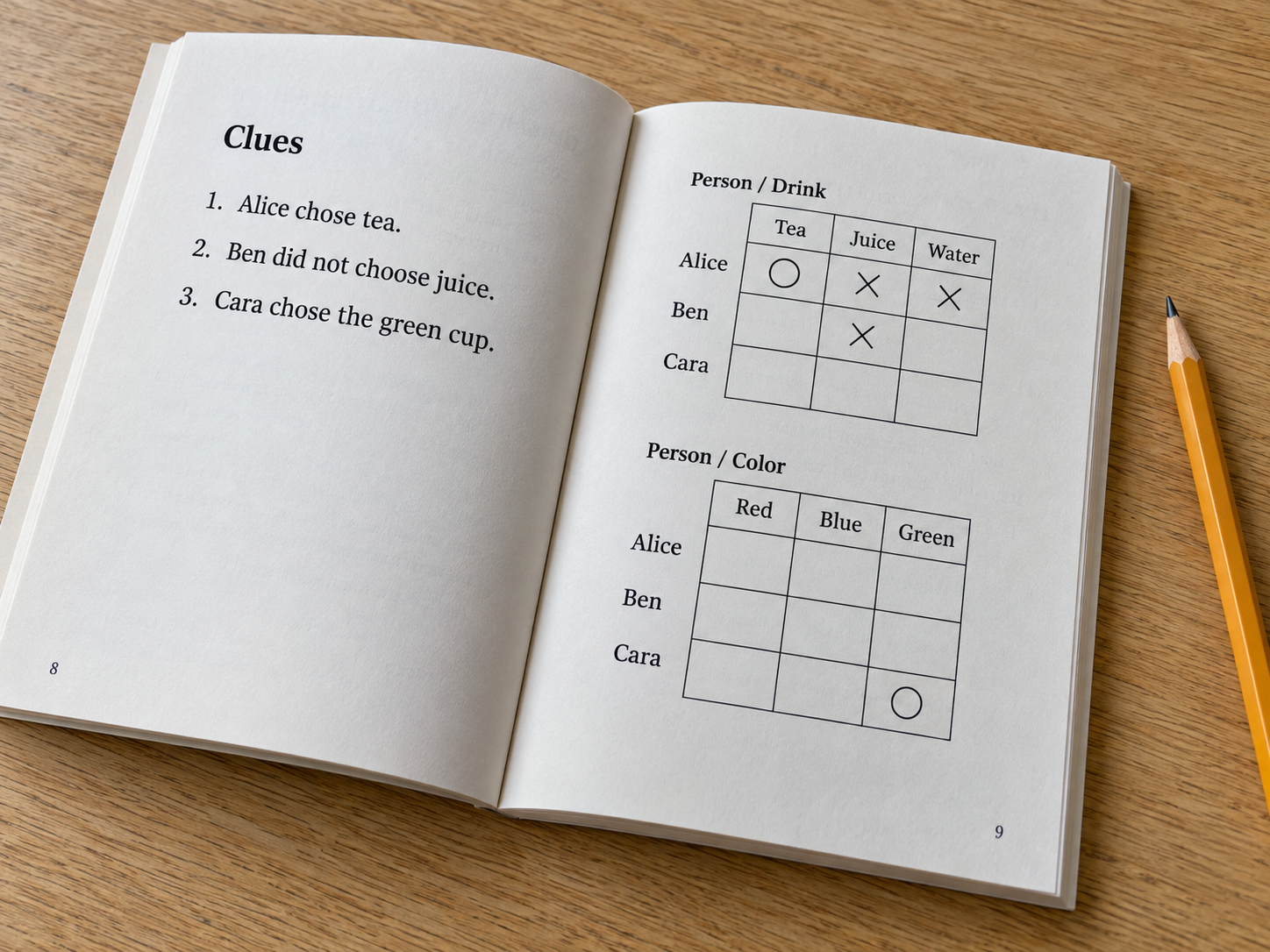
A title does not tell you whether the book contains deductive grids, number puzzles, visual problems or a mixture. Find a sample of the actual activity. In a logic grid, the solver uses clues to establish relationships; that is different from simply searching for a hidden word.
The sample also tells you more about difficulty than a broad “easy” or “expert” label. Look at clue length, grid complexity and how the rules are introduced. A worked example helps a learner see how to begin, rather than just telling them whether an answer is correct.
Choose pages they can comfortably solve on
Readable type, clear contrast and room for notes make a practical difference. Compare the book's size and binding, including whether it lies reasonably flat. If their reading corner needs better illumination, an adjustable reading light is a separate useful option.
Check that the listing is the intended printed edition. Ebook prices are not paperback prices, and a used book may already contain somebody else's answers. A fresh copy keeps the challenge intact.
Decide what sort of help suits them
Some books give final answers; others offer hints or explain the deductions. A new solver may value that extra support, while an experienced one may prefer to keep answers out of sight until needed.
For hands-on moves rather than pencil marks, consider a twisty puzzle. A logic book can simply be an enjoyable way to spend quiet time; it need not come with a claim about improving intelligence.