 Image unavailable
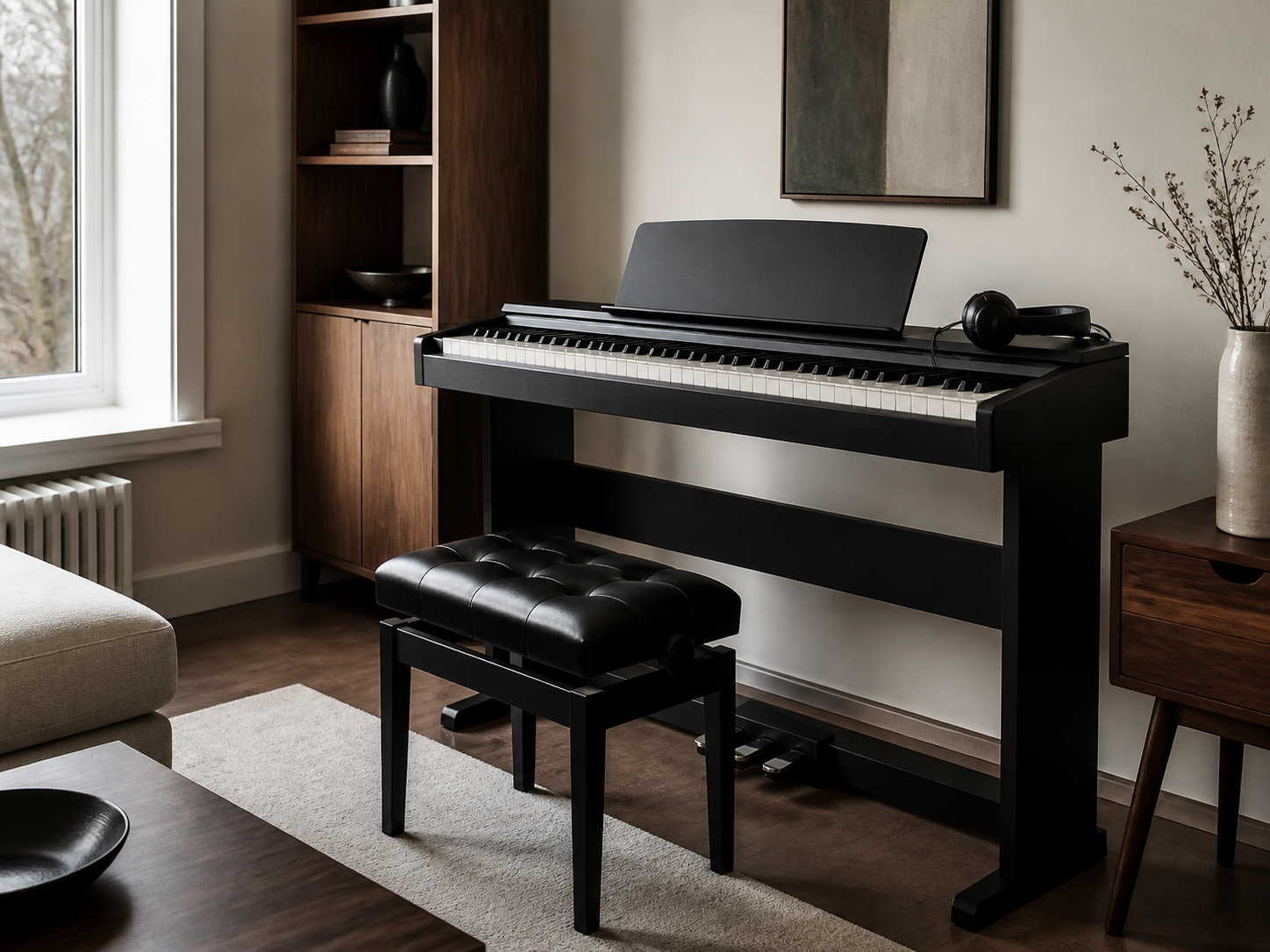
Illustrative image — products may vary.
Digital Piano Keyboard: Find the piano they will enjoy sitting down to
A digital piano keyboard can make everyday playing possible for a learner or returning musician. Match the key action, sound and room setup to the person receiving it.
Ad: GiftAim earns commission or fees from qualifying purchases and sign-ups through links on this page, at no extra cost to you. How we’re funded.
Start with the playing they want to do
A digital piano keyboard can be a practical alternative when an acoustic instrument will not fit their home or routine. It avoids acoustic-piano tuning, but power, sensible care and a suitable place to play still matter. Establish whether they want piano lessons, casual songs or a particular upgrade.
An instrument with its own sounds differs from a MIDI-only controller. Built-in speakers should also be confirmed, since they are not universal. A MIDI keyboard controller can require a separate computer or other sound source, so check what will actually make the music before choosing.
Let the keys make the case
For piano study, discuss 88 full-size weighted keys with the recipient or teacher. Hammer-style action aims for a piano-like resistance; touch sensitivity describes response to the way a key is played and does not prove a weighted mechanism. Semi-weighted descriptions need reading just as carefully.
A lighter or shorter keyboard can suit a portable setup or informal music-making, with a different feel and range. That may be exactly what they want. A player returning to the piano may have a firm preference, making a shared choice more useful than an expensive guess.
Be precise about quieter practice
With a suitable output, headphones can reduce what the rest of the room hears. Check the socket and whether it mutes the internal speakers. Moving keys can still make mechanical noise; headphone playing is not a promise of complete silence at any hour.
Review recording and connection features by their actual purpose. USB MIDI does not establish USB audio recording, and Bluetooth can serve a limited job rather than every expected connection. Prioritise what the recipient uses rather than a crowded specification list.
Price the complete playing position
Find out whether the listing includes a regional power supply, music rest, keyboard stand, piano bench and sustain pedal. A bundle does not establish that every accessory suits the player or offers the pedal control they want.
Measure depth and width, leaving space for support, seating, pedals and cables. A half-pedalling system needs compatible pedal and instrument support; the supplied on/off footswitch may do a simpler job.
Give them the first choice of settings
For a birthday or Christmas, keep the receipt and allow for delivery and agreed assembly. The recipient should own any accounts, app installation and personal settings. Included lesson access can be a trial rather than a continuing course, so read its terms before describing it as part of the present.
A keyboard that feels right and fits a usable space is easier to return to. Choose those foundations before a large collection of sounds or an accessory count that looks generous on the box.