Start with the questions inside
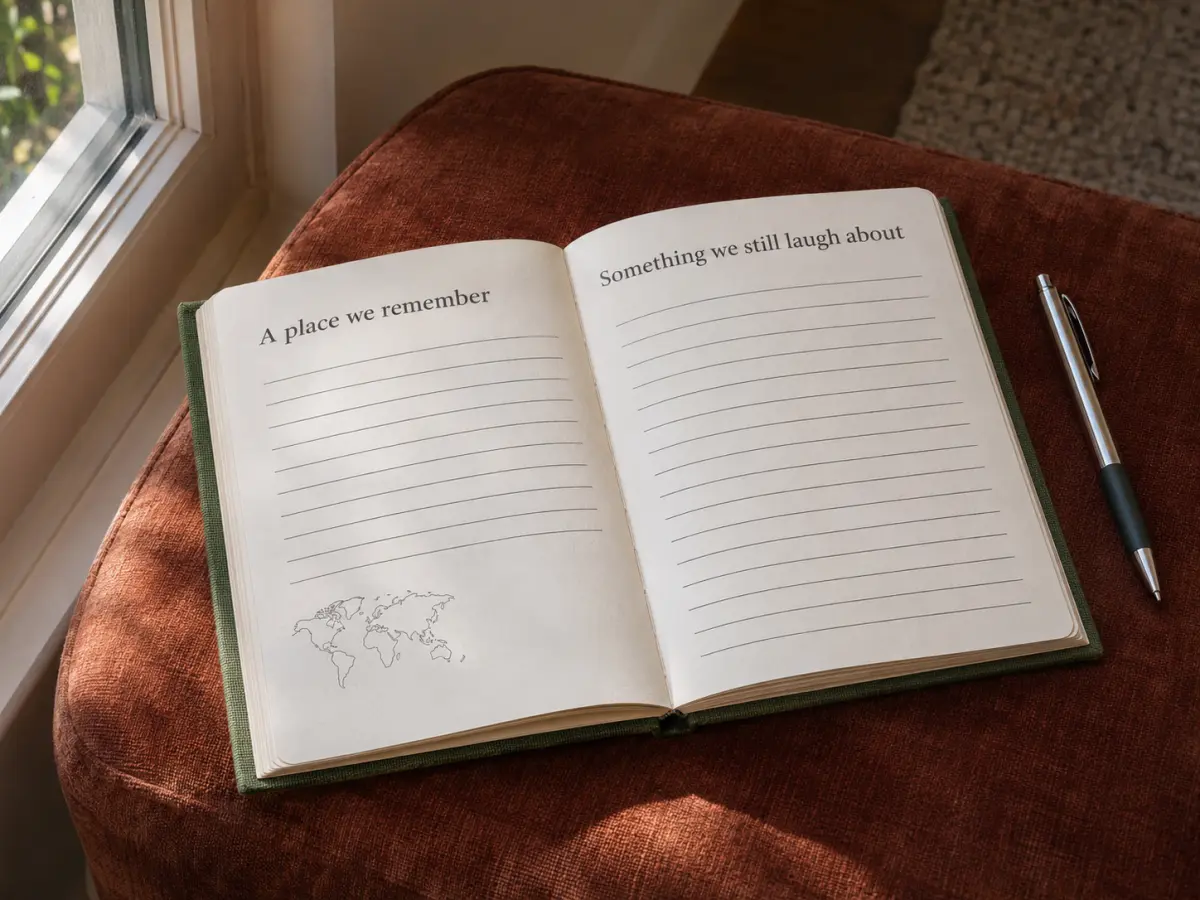
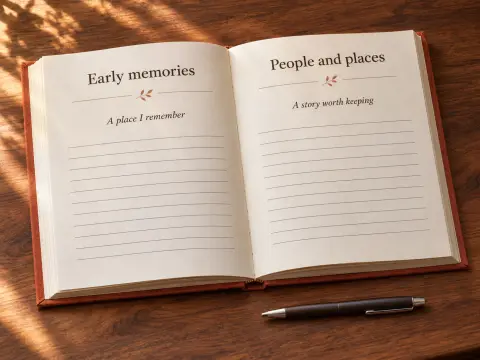
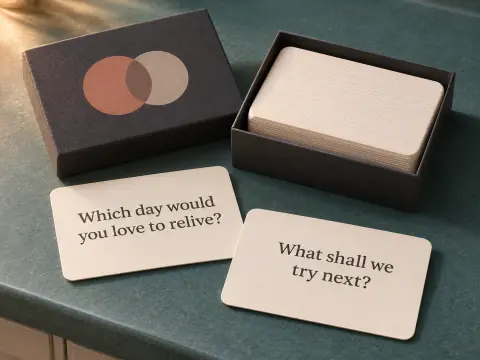
A memory journal can catch the little details that photographs miss: why a place mattered, what went wrong on a trip, or the story behind a familiar joke. Printed prompts make it easier to begin, but the right questions matter more than a handsome cover.
Browse a sample spread. A shared-history journal is different from a wedding planner or relationship workbook. Choose a tone the recipients would enjoy, with assumptions about marriage, children and family roles that fit their lives.
Leave the early years optional
Starting at a silver or pearl anniversary should not mean reconstructing every year since the wedding. Open-ended chapters can be easier to dip into than a fixed annual sequence. If the book has dated sections, look at whether they can start with the current year and leave earlier pages alone.
Check readable print, enough writing room and a binding that opens comfortably.
Look for space for two accounts rather than one person speaking for both.
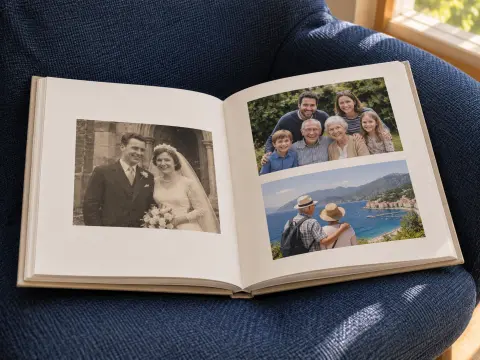
Read whether photographs can be added, and how they attach to the pages.
Let them decide what stays private
One partner could begin with a few favourite memories, while a gift from friends can simply arrive blank. There is no obligation to answer intimate questions, finish the book or hand it back for others to read. A journal works best when writing in it is something both people want to do.
Choose a life story journal for one person’s wider memories. If a writing project would be unwelcome, a completed personalised photo book offers another way to collect the story.