AI-generated illustrations; products may vary. Browse products via the shop links.
Ad: GiftAim earns commission or fees from qualifying purchases and sign-ups through links on this page, at no extra cost to you. How we’re funded.
Bracelet: A familiar wrist, a detail chosen for them
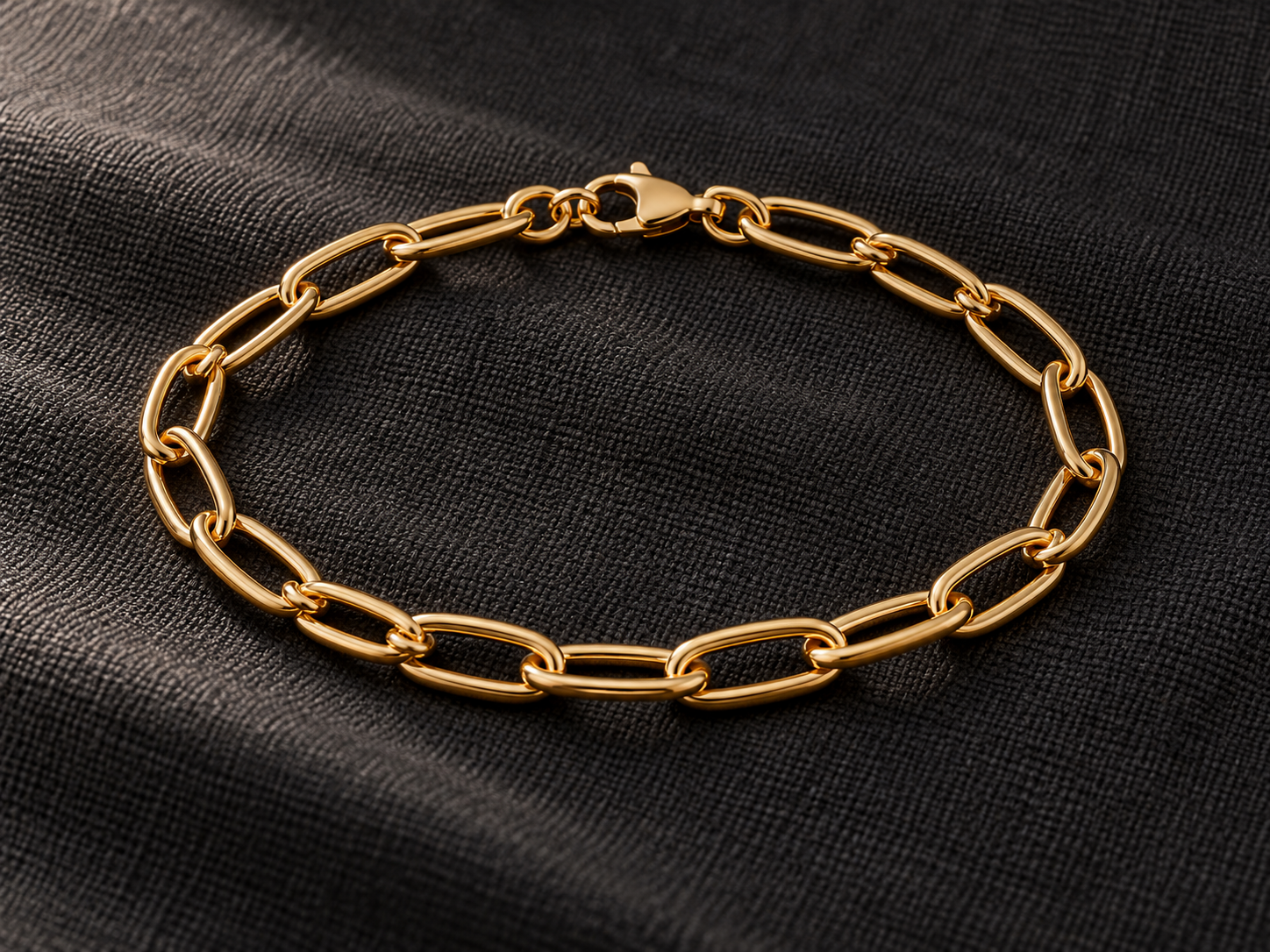
A bracelet is a finished gift to wear, from an uncomplicated chain to a bangle or sparkling line of stones. Take a cue from jewellery they like, then match the fit and closure to the way they will use it.
Ways to shop
Decide what a comfortable fit means
A bracelet should have the room the wearer enjoys, not simply match their wrist measurement. For a chain, compare the usable length and extension with one they already wear happily. Allow for how its links or decorative pieces sit against the wrist.
A closed bangle has to go over the hand, so wrist circumference alone cannot settle its size. Check the internal dimensions and the seller’s fitting guidance. Hinged bangles and open cuffs have their own opening and shape; an adjustable description is not a promise of universal fit.
Make the fastening part of the choice
A lobster catch uses a small lever to open onto a ring. Sliding fittings tighten along chain or cord, and elastic versions stretch over the hand. Choose a mechanism they can manage comfortably, including when they are putting it on without help.
Count the bracelets supplied: a single piece and a photographed stack may be different purchases.
Establish whether any shown charms come with it.
Check the exact charm system before buying additions; similar-looking fittings are not necessarily interchangeable.
Decide whether they would enjoy a ready-to-wear piece or the activity of making one. Those are different gifts, even when both end with something around the wrist.
Check more than the catch
Some listings describe a sterling-silver clasp on a bracelet made from other materials. Read what the chain or bangle is made from too. Sterling silver is an alloy often described as 925; silver plating or silver colour is a different specification.
Gold plating provides a layer of gold over a base material. It is not solid gold, and the surface still needs suitable care. Use the sterling-silver or gold-plated shopping choice when that material matters to the gift, then confirm the actual version instead of relying on a colour name.
Stones, charms and coloured details should suit the recipient’s taste. Pass on the specific care information, rather than assuming a broad waterproof or non-tarnish headline covers every way they might wear it.
For someone who would enjoy choosing threads and knotting their own, consider a friendship bracelet kit.
If wrist fit is uncertain, browse anniversary gift ideas for other ways to mark the occasion.
A leather alternative to a metal bracelet
A leather band gives a third-anniversary bracelet a different direction from the silver and gold-plated choices. Choose a braided, wrapped or cuff style around what they wear, with the working length and clasp settled before any permanent personalisation.
Read the material of the band itself and confirm that the recipient wants animal leather. The clasp’s metal does not determine the whole bracelet’s material. Keep the specific care instructions and return details; an adjustable fastening still has a usable size range.
A copper choice for seven years
Choose genuine copper or clearly described copper plating when the seventh-year material is part of the present. A copper-coloured coating alone does not establish the theme. Fit still comes first: compare the opening, smooth edges and wearable dimensions.
Copper can darken with a natural patina and may leave temporary colour on skin. Buy it as jewellery rather than for magnetic or medical claims, keeping the specific care instructions with the gift.
Eleven years, without guessing wrist fit
A gold-plated bracelet offers the modern eleventh-year fashion-jewellery route.
Settle its wearable length or bangle opening and a catch they can manage. Plating changes the finish, not the fit; regular wear still needs the particular base-metal and surface-care information supplied with the piece.
A pearl bracelet for twelve years
For the modern twelfth-anniversary theme, choose genuine cultured pearls and confirm the wearable length. A knotted strand, elastic bracelet and adjustable fastening need different care and fit checks. Read the clasp metal separately from the pearls. Avoid ultrasonic or steam cleaning, and store the bracelet away from harder jewellery that might scratch it.
A gold detail for fourteen years
A gold-plated bracelet can follow the modern fourteenth-anniversary theme. Choose the stated gold-plated version rather than assuming a gold colour establishes the material. Keep the base-metal and care information with the gift.
Pearl for thirty years
The traditional thirtieth-anniversary material is pearl, and the cultured-pearl bracelet option makes that connection explicit. Look at the wearable length, fastening and pearl size alongside what the recipient already wears. Cultured pearls are real pearls; imitation beads and mother-of-pearl are different materials. They need gentle care and can scratch, so a bracelet worn against a desk all day needs more thought than an occasional piece.
The jade choice starts with the bracelet’s shape
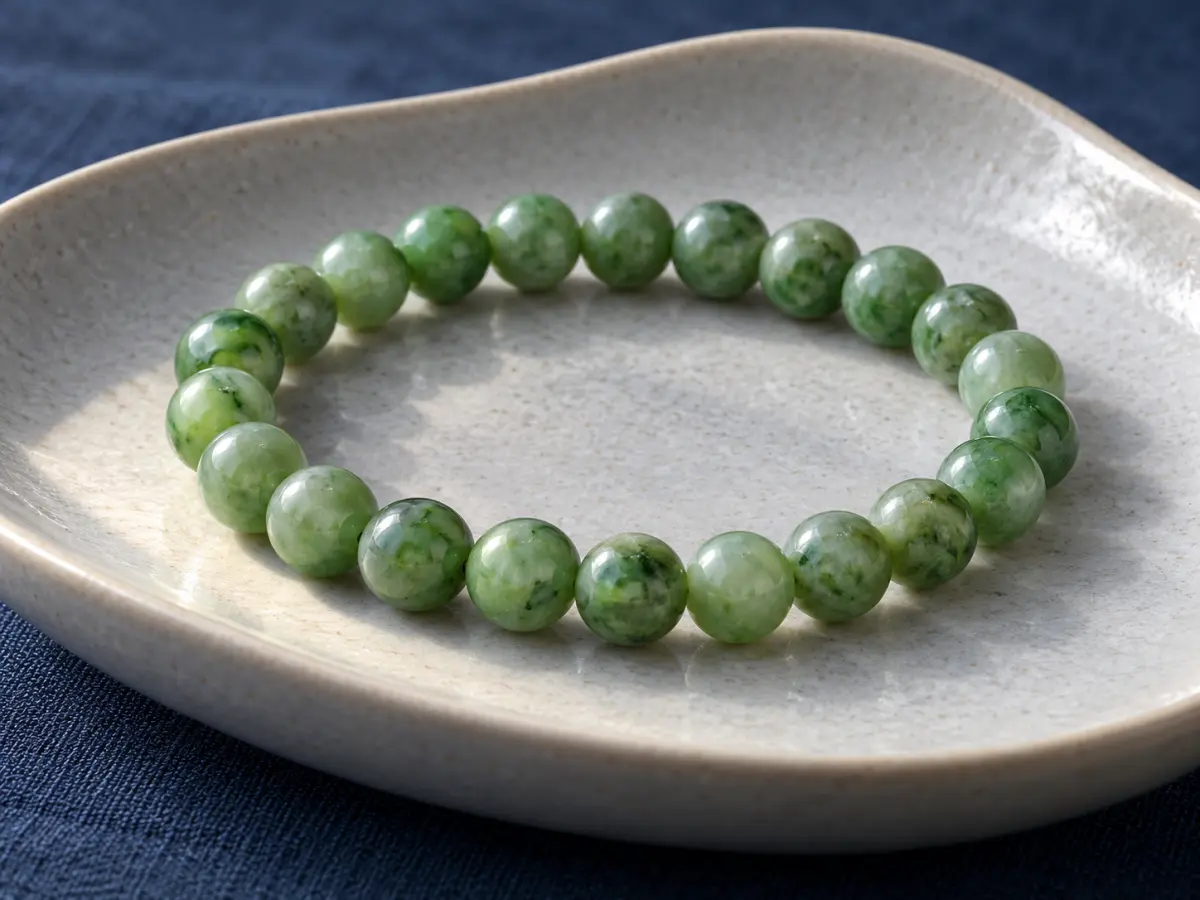
For thirty-five years, jade can become a beaded bracelet, linked design or carved bangle. The modern material theme needs actual jade: look for jadeite or nephrite and clear treatment information, rather than a green colour or an ambiguous gemstone trade name.
A stretch strand and a closed stone bangle are different fitting decisions. The bangle’s internal diameter must suit the hand it passes over; it does not open or stretch like elastic. Follow that seller’s measuring method and keep the exchange details. Choose the stone for its appearance and the recipient’s taste, without adopting health or luck claims from a listing.