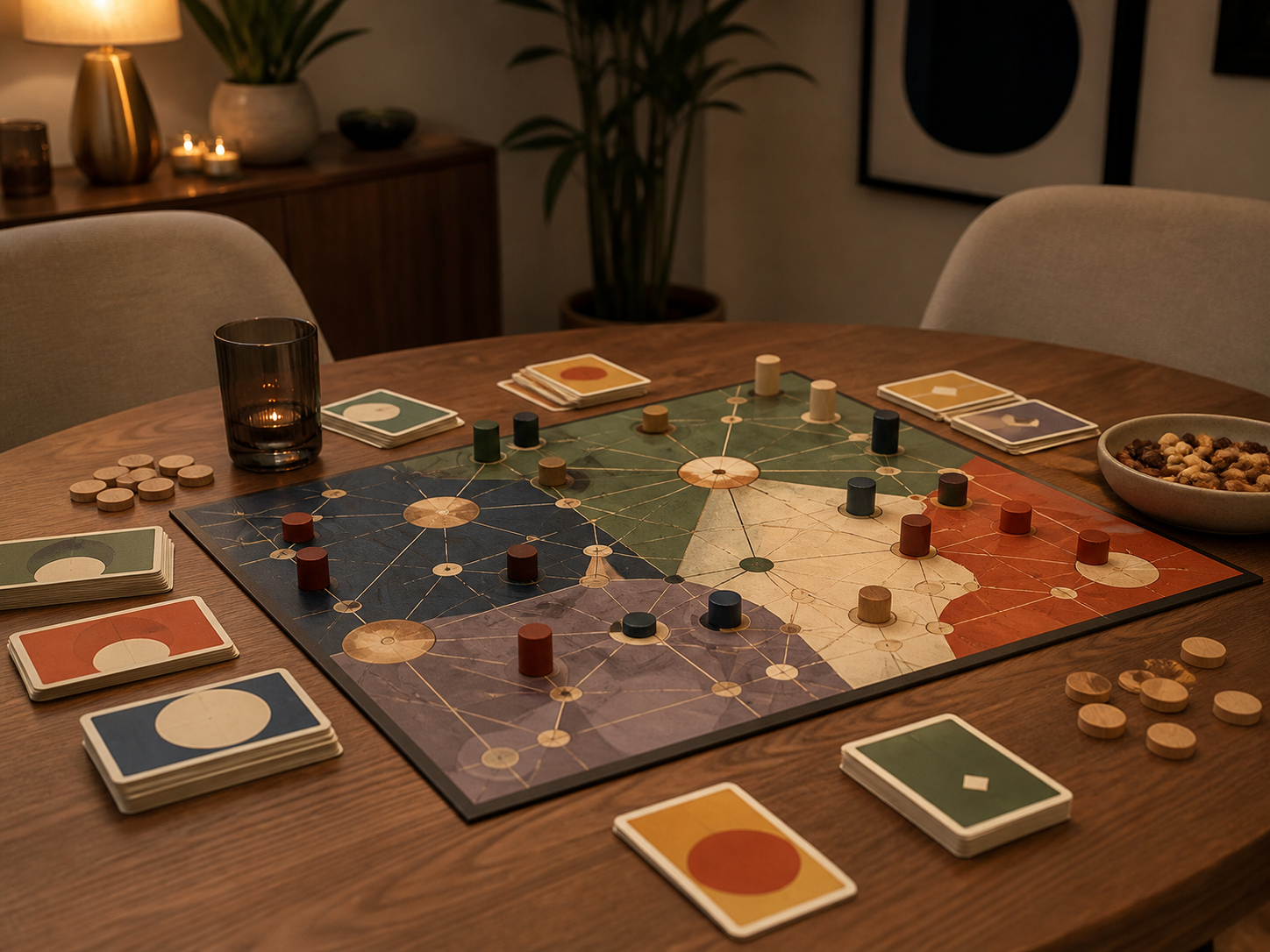
AI-generated illustrations; products may vary. Browse products via the shop links.
Strategy Board Game: A plan worth bringing to the table
A strategy board game gives players choices to weigh and plans to adapt. Match the exact game to their usual group, experience and time at the table.
Ad: GiftAim earns commission or fees from qualifying purchases and sign-ups through links on this page, at no extra cost to you. How we’re funded.
Pick the plan they want to make
A strategy board game earns its place when the recipient enjoys weighing choices, adapting to other players and seeing a plan work. The gift might involve building a route, managing resources or placing tiles; the theme should invite them in, not hide rules they'd rather avoid.
Start with games they already own and enjoy. Another edition or expansion can be welcome, but only when it adds something they want and works with the right base game. A large box is no promise of a better evening.
Match the game to the real table
Look at the exact player range, usual playing time and complexity. A game that technically allows two may feel different at that count, while a title needing four won't solve a two-person household's game night. Read how the rules describe those modes.
Allow for teaching, setup and packing away as well as the time on the box. For someone new to modern strategy games, clear instructions and a manageable first session are safer than an epic commitment. A compact travel version may trade convenience for smaller pieces and print.
Table space: compare the board, cards and each player's area with their usual setup.
Reading and handling: consider text size, color distinctions, fine movements and reach.
Theme: choose content the group would welcome, including any adult or unsettling material.
Competition, cooperation and the kind of commitment
Many strategy games ask players to compete, making tactics and interaction part of the appeal. Others use strategic choices in cooperative play. If their main wish is to share victory or defeat, a cooperative board game gives that decision its own starting point; strategy and cooperation are not opposites.
Campaign games can ask the same group to return, and legacy editions may permanently change components. Check that commitment, any app or internet needs, and whether the box is standalone. Familiar branding doesn't establish edition compatibility.
For a shorter, movement-led challenge, compare a dexterity board game. A trivia game rewards knowledge instead; a chess set offers a specific two-player classic. The right choice is the one their actual group wants to get to the table.