 Image unavailable
Illustrative image — products may vary.
Dexterity Board Game: A steady hand, a wobble, another round
A dexterity board game turns balancing, stacking or flicking into a shared tabletop challenge. Choose the physical action as carefully as the player count.
Ad: GiftAim earns commission or fees from qualifying purchases and sign-ups through links on this page, at no extra cost to you. How we’re funded.
Choose the move they will enjoy
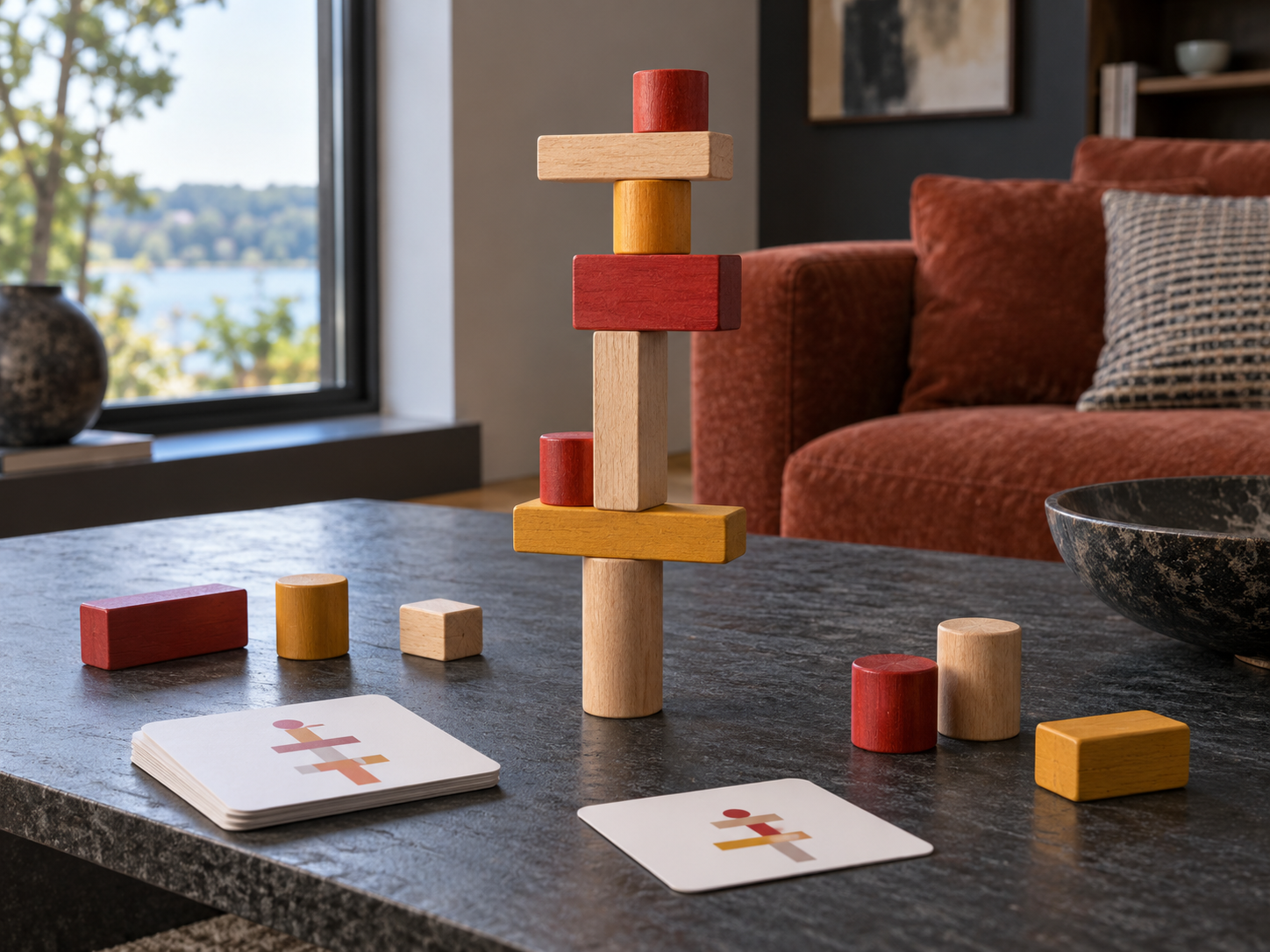
Some game nights call for a long plan; others begin with someone trying very hard not to knock a tower over. A dexterity game makes a physical action part of the rules, whether players stack pieces, flick a disc or lift an object without disturbing its neighbors.
Look for a complete standalone game, with rules and the components needed to play. A bag of building blocks or an expansion for a game they don't own makes a different gift. The photographs should show what players actually do, not just an impressive finished structure.
Match the challenge to the players
Fine finger movements, quick reactions and reaching across a table place different demands on people. A relaxed turn-based balancing game can feel very different from a race against a timer. Choose around the recipient's comfort with the action, rather than assuming short rules make a game accessible to everyone.
Player count: find the range for the exact edition and their usual group.
Space: allow for the playing area, spare pieces and anything that might fall or roll.
Components: compare piece size, grip, color contrast and how easily players can see the target.
Small components also make the maker's age guidance important, especially in a home with younger children. An adult enjoying a playful game doesn't make its pieces suitable for every child nearby.
Think about the next round
Some games knock players out; others let everyone keep trying. Short resets can be helpful when people want a few rounds between conversations. Check how the pieces pack away and whether a travel version is genuinely comfortable to handle.
For someone who prefers thinking several moves ahead to making a precise movement, a strategy board game offers another kind of challenge. A party card game can suit a group more interested in prompts or word guesses than a balancing act.