 Image unavailable
Illustrative image — products may vary.
Puzzle Sorting Trays: Give every loose piece somewhere to wait
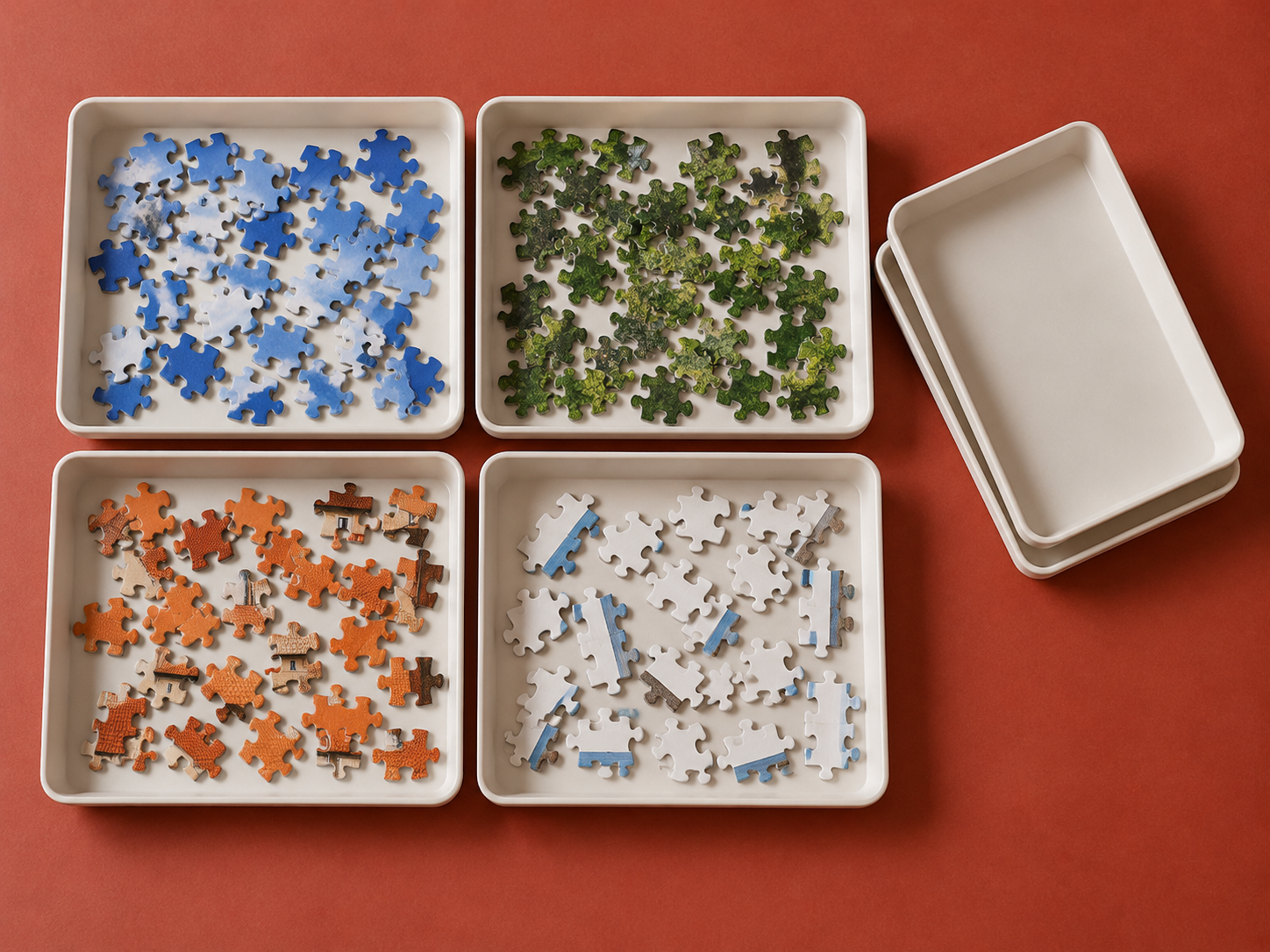
Shallow sorting trays spread out jigsaw pieces by color, shape or section, then stack together between sessions.
Ad: GiftAim earns commission or fees from qualifying purchases and sign-ups through links on this page, at no extra cost to you. How we’re funded.
More useful sorting space
Sorting trays are separate shallow containers for loose jigsaw pieces. They help someone see the pieces they have already grouped without mixing everything back into the box. Unlike a deep craft organizer, the useful surface is where pieces can lie face up.
Usable area matters more than tray count. Six tiny trays may give less working space than four larger ones. Compare the inner dimensions with their usual piece size and the way they sort: by picture section, color, edge pieces or whatever helps them see a possible match.
Look at the stack, not just the spread
They will need table room while the trays are laid out. When stacked, the trays should leave clearance for the pieces inside. Read whether a lid is included, whether it closes only the top tray and whether the stack is intended for carrying or simply keeping together on a shelf.
A pale base can make dark pieces easier to see; a dark base can suit lighter pieces. Smooth shallow sides make picking pieces up easier, while deep compartments may hide them. Consider their handling preferences rather than assuming one material suits everyone.
Avoid buying storage they already have
Some puzzle boards include drawers or removable trays. Find out whether extra sorting containers would add useful room or duplicate their setup. These trays hold loose pieces; they do not replace a surface for the unfinished jigsaw.
Choose a set whose storage footprint suits the recipient's home. A large stack can be convenient on a shelf and awkward in a shallow drawer.