 Image unavailable
Illustrative image — products may vary.
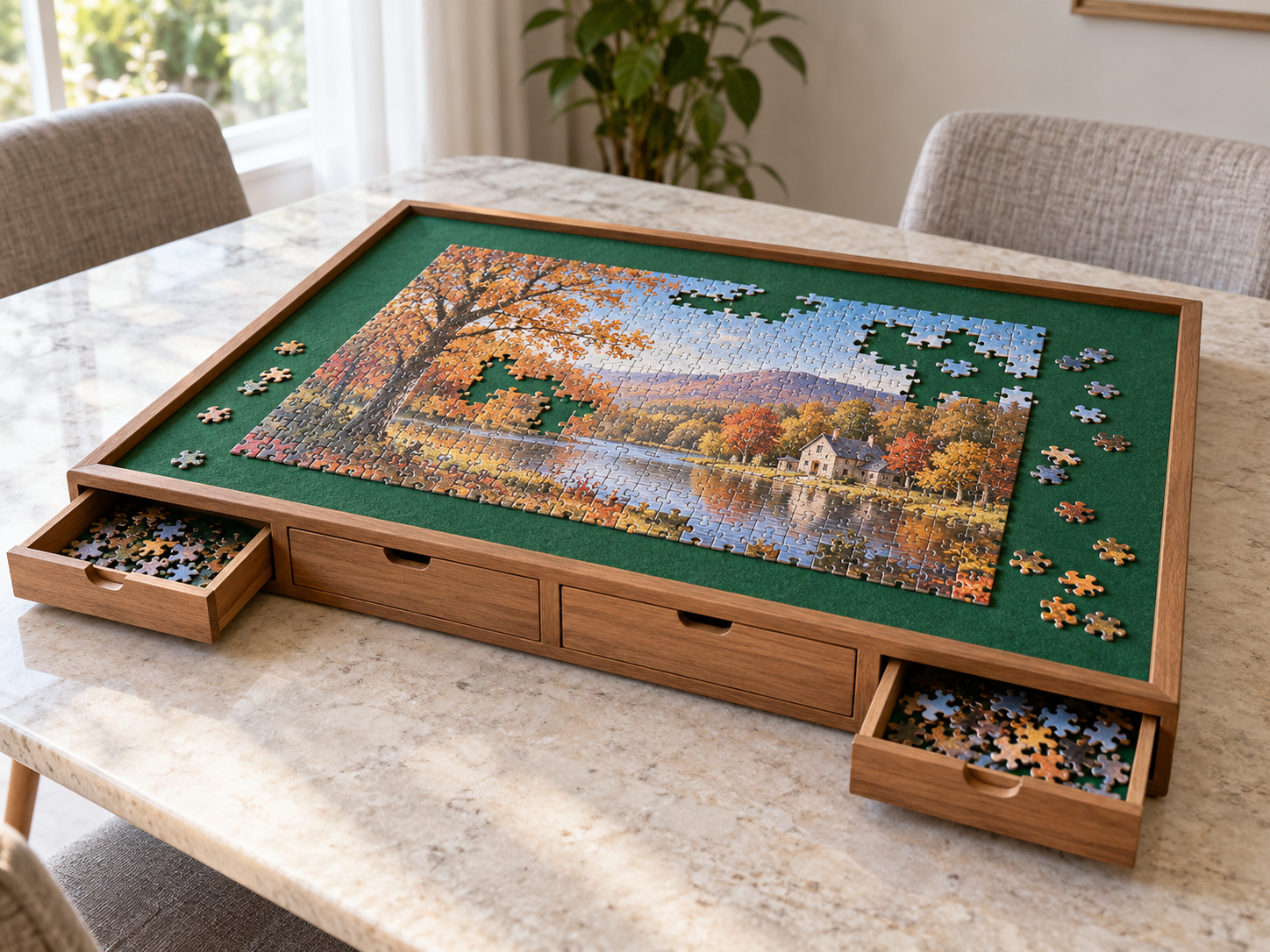
Puzzle Board: Keep their puzzle in progress
A dedicated jigsaw surface helps a regular puzzler move a project out of the way without starting over.
Ad: GiftAim earns commission or fees from qualifying purchases and sign-ups through links on this page, at no extra cost to you. How we’re funded.
Measure the working area, not the headline capacity
A board marked for 1,000 pieces will not fit every 1,000-piece puzzle. Compare its usable inner dimensions with the finished picture, allowing for raised edges and any space they want for sorting. The outside measurements also decide whether it fits their table and storage spot.
This is a rigid surface for working on and moving an unfinished puzzle. It is different from a roll-up mat, which bends around a tube; choose the storage approach before comparing extras.
What makes moving it practical?
The board's weight matters once a puzzle and loose pieces are added. A cover can protect the surface, but it does not automatically make the board safe to carry upright. Read the maker's transport instructions and look for drawers or trays that stay shut when moved.
A flat board is straightforward when they already have a comfortable table.
A tilting support changes the viewing angle, but the surface must hold the pieces at that angle.
A rotating base needs clearance around the board, including any open drawers.
Felt and other textured surfaces can help resist sliding. They may also make it less easy to slide a large completed section across the board. Think about the way the recipient usually works.
Give the workspace, not another puzzle by accident
Most boards are accessories, with the puzzle sold separately. For an established hobbyist, an empty board can be exactly the useful upgrade they want. For someone starting out, pair it with a jigsaw puzzle whose dimensions actually fit.