 Image unavailable
Illustrative image — products may vary.
Star Chart Planisphere: Find familiar shapes in the night sky
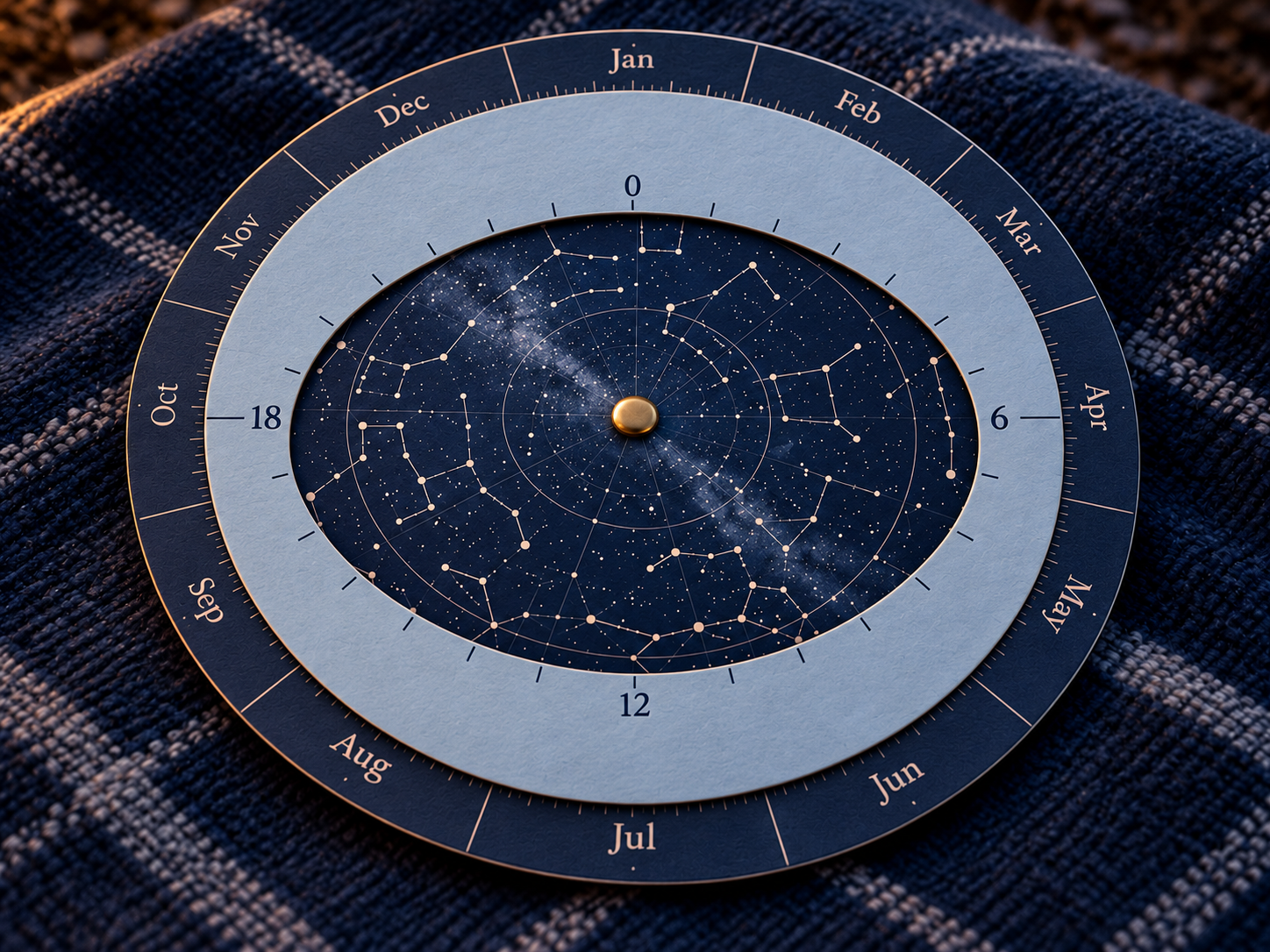
A rotating printed star finder for learning which constellations are above the horizon, matched to the observer's latitude and hemisphere.
Ad: GiftAim earns commission or fees from qualifying purchases and sign-ups through links on this page, at no extra cost to you. How we’re funded.
A sky map you turn by hand
A planisphere is a rotating star chart. Aligning its date and time scales shows a view of the sky for the latitude it was designed around. It can help a curious beginner start recognizing constellations without buying a telescope or relying on a phone.
Buy for where they'll look up
A chart suitable for one part of the US may be a poor match elsewhere. Manufacturers offer different northern latitude bands and southern-hemisphere versions. Use the recipient's observing location, rather than your shipping address, to choose the version; a trip may need a different chart from home.
Readability is more useful than pocket size alone
Compare the lettering, chart diameter and contrast in the light they'll use outdoors. A small wheel packs easily but may be awkward to read; a larger one is easier to share. Card and plastic versions differ in durability, so check the materials and weather limitations.
Know what the wheel can tell them
Follow that chart's instructions for local time and daylight saving. A planisphere isn't a live sky view: clouds, buildings and light pollution still affect what can be seen. It doesn't supply current planet positions or replace an observing guide for a particular date.
Match both hemisphere and the maker's stated latitude coverage.
Choose a rotating sky finder, rather than a decorative star poster or an astrology chart.
Read the instructions together before the first outing.
If they later want to explore beyond naked-eye observing, a beginner telescope is a separate equipment decision, with its own mount and storage needs.