 Image unavailable
Illustrative image — products may vary.
Origami Kit: A fresh square of paper, a new shape to discover
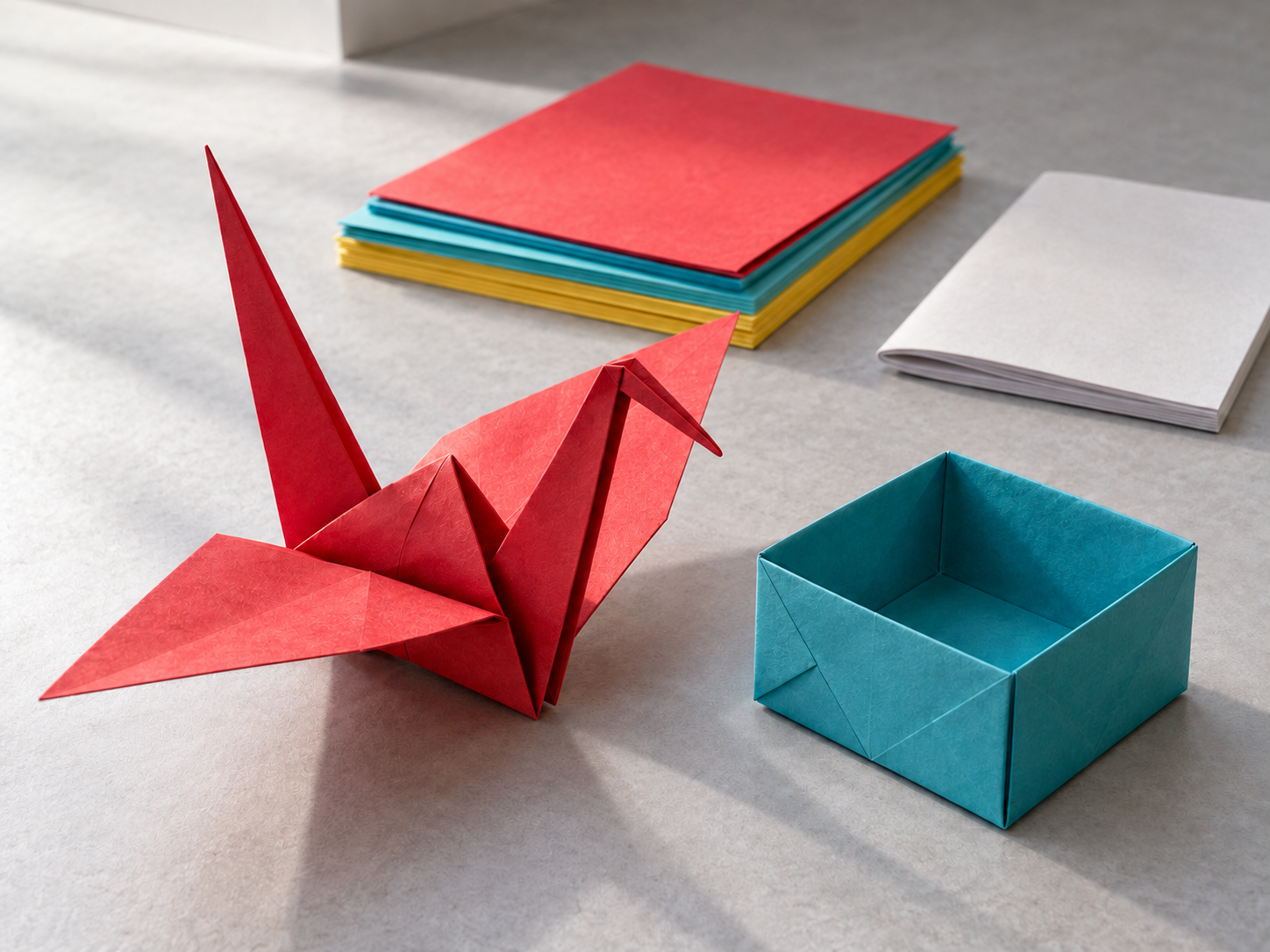
An origami kit pairs folding paper with project instructions, giving the recipient a compact way to learn paper models and make them again.
Ad: GiftAim earns commission or fees from qualifying purchases and sign-ups through links on this page, at no extra cost to you. How we’re funded.
Choose the models before the mountain of paper
Look at the projects inside the guide: animals, boxes, flowers and geometric forms can call for very different folds. A small selection that builds from simple models is more useful for a newcomer than a cover filled with impressive finished work. Someone who already folds may prefer a particular theme or a step beyond the basics.
Check that it is a kit with paper and guidance, rather than a paper refill or a book sold on its own. The number of sheets tells you how much practice material is supplied, but not how clearly the craft is taught. Leave room for several attempts at the same model.
Make the instructions and paper work together
Preview the diagrams if possible. They should show the stages clearly and explain the folding symbols, with a language the recipient can read comfortably. Video support can help with an unfamiliar movement, but check how it is accessed; a DVD is less useful if they have no suitable player and no online alternative.
Compare the paper size, colors and whether the two sides are different. Follow the project's recommended size rather than choosing tiny sheets for a first attempt. Patterned or two-sided paper changes the finished appearance; plain practice squares can make it easier to see a crease.
Origami needs a clear flat surface more than a large collection of equipment. Check individual projects for any added materials or cutting rather than assuming every box includes them. Choose the maker's age guidance and complexity for the actual recipient, including adults who would enjoy learning the craft.
First folds without a tutorial screen
For a child’s screen-free activity, choose a kit with clear printed steps rather than one that depends on video demonstrations. Simple first models, readable diagrams and paper that is comfortable to hold make the starting point more approachable.
Check the maker’s age recommendation and whether a grown-up needs to read or demonstrate the folds. More complicated models can follow later; there is no need for the first box to promise a whole display of intricate creations.