 Image unavailable
Illustrative image — products may vary.
Metronome: A steady beat for the next practice session
A metronome gives a player a regular beat to practice against. Choose a separate device when its sound, display and controls suit them better than the timing tools they already use.
Ad: GiftAim earns commission or fees from qualifying purchases and sign-ups through links on this page, at no extra cost to you. How we’re funded.
Choose the beat they'll want to use
A metronome marks a regular pulse at a chosen speed. The player uses it as a reference while practicing; it doesn't listen to their performance and fix their timing for them.
Before choosing one as a gift, check whether they want a separate device. A phone app, keyboard or existing tuner may already supply a metronome they like. The useful addition is a beat they can hear or see easily, with controls that don't interrupt the session.
Mechanical or digital?
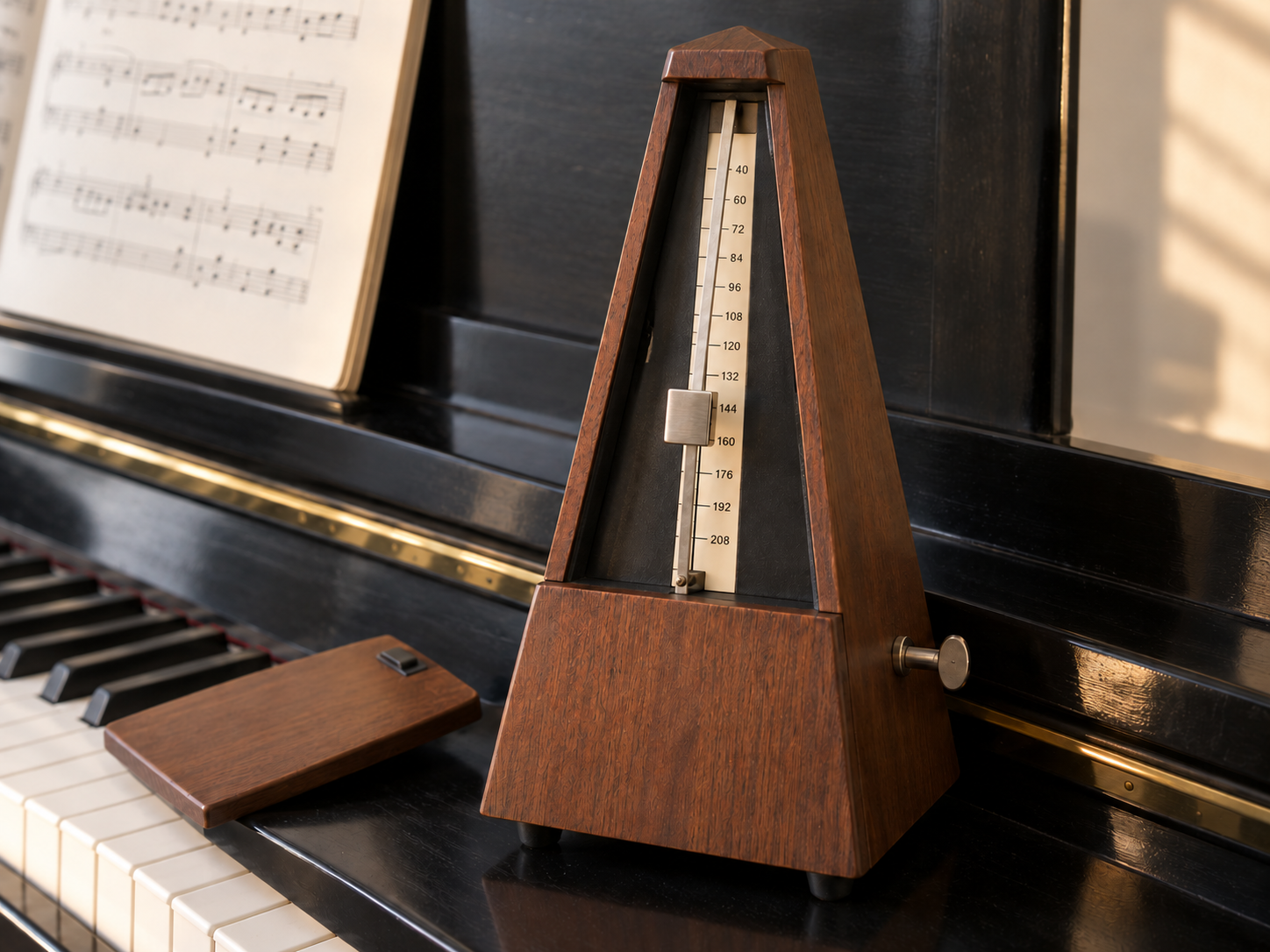
A wind-up mechanical model has a moving pendulum and an audible tick, without batteries. It can suit a fixed practice space and someone who likes that visible motion. Check the maker's setup instructions and find a suitable level place for it.
Digital models vary more in their controls. Some offer adjustable volume, visual beat indicators, headphone output or different rhythms. Choose the functions they need rather than assuming every model includes them.
A short checklist before buying
Tempo: check the range in beats per minute, usually written as BPM, against the music they practice.
Beat settings: an accented first beat or smaller divisions between beats can be useful if they want them; keep the controls understandable.
Sound and display: check volume control, clear visual cues and any headphone connection they expect to use.
Power and size: compare wind-up, replaceable-battery or rechargeable models, and check what comes in the box.
For a pianist, check where it will sit within sight of the keys. For a guitarist or ukulele player taking it to lessons, a compact model may be easier to keep with their music.
It makes a useful birthday or Christmas gift when they've mentioned working with a steady beat. If their immediate need is checking pitch rather than timing, a clip-on instrument tuner serves that different job.