 Image unavailable
Illustrative image — products may vary.
Logic Puzzle Book: A good clue and a little quiet time
A printed logic puzzle book gives a paper-and-pencil solver new problems to work through, with difficulty and page design worth choosing carefully.
Ad: GiftAim earns commission or fees from qualifying purchases and sign-ups through links on this page, at no extra cost to you. How we’re funded.
Choose the kind of thinking they enjoy
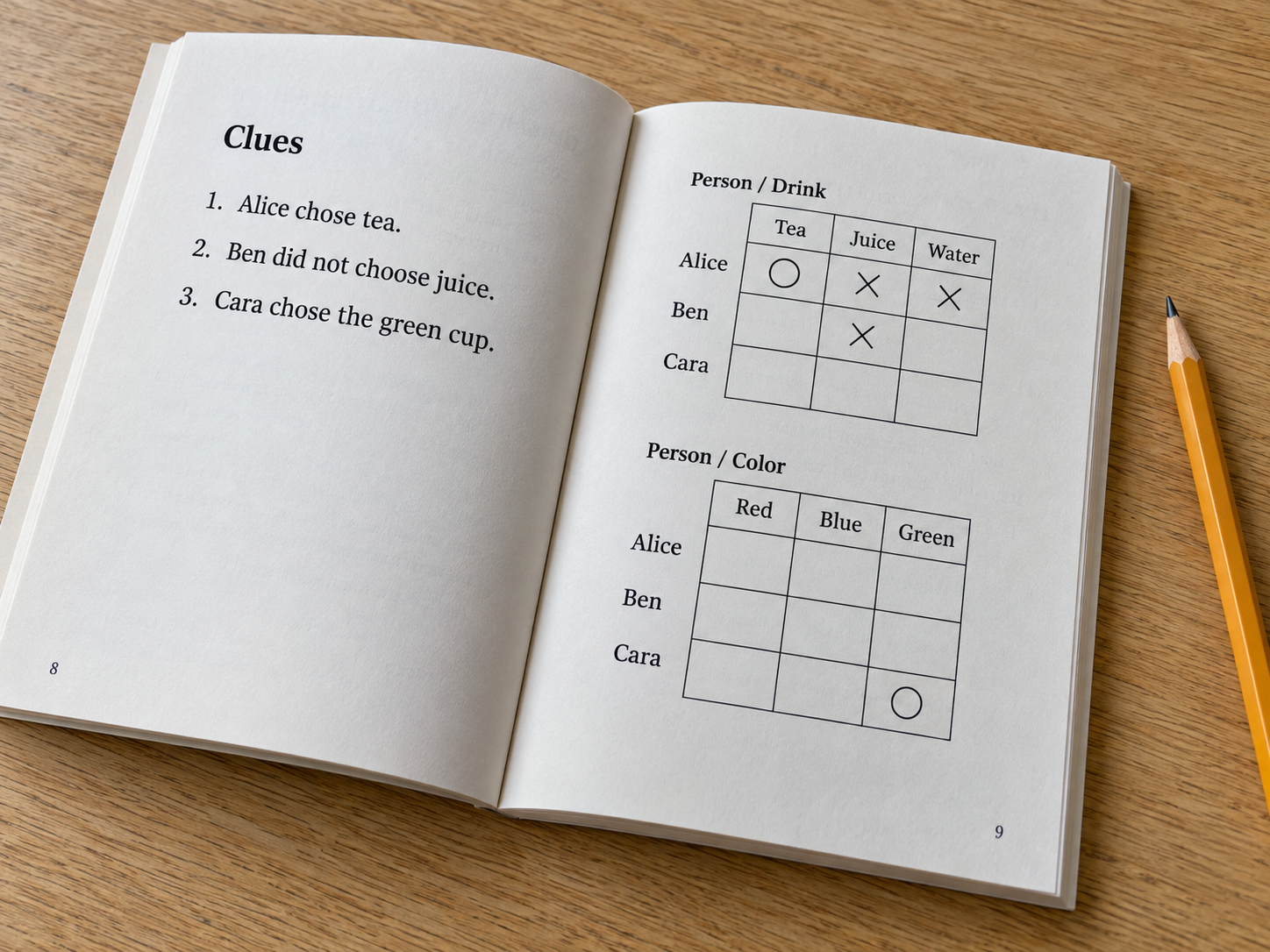
“Puzzle book” can mean anything from word searches to deductive grids. For a logic fan, look at the actual puzzle types and a sample page. Grid puzzles use clues to work out relationships; number-based and visual logic challenges ask different questions. A mixture can be welcome when the recipient enjoys variety.
Difficulty labels are only a starting point. A sample shows the length of the clues, complexity of the grid and how much writing is involved. A clear worked example can be more useful than a large total of puzzles with little explanation.
Let the page design do some of the work
Print size, contrast and space for notes matter in a book they will spend time solving. Compare the page dimensions and binding: some paperbacks need holding open, while other formats sit flatter. If lighting is the missing part of their setup, a reading light may be a useful alternative accessory.
Choose the actual printed edition you intend to give. An ebook price or used copy does not describe a new paperback, and a previously completed puzzle book may leave little to solve.
Help without giving the answer away
Find out whether the book includes hints, full solutions and explanations. Answers at the back can be enough for an experienced solver; someone learning may appreciate the reasoning as well.
A book offers quiet, portable solving, but not the tactile movement of a twisty puzzle. There is no need to promise a brain-training benefit: the pleasure of working out a satisfying answer is a good reason to give it.