 Image unavailable
Illustrative image — products may vary.
Knife Sharpening Stone: A new skill for the knives they already like
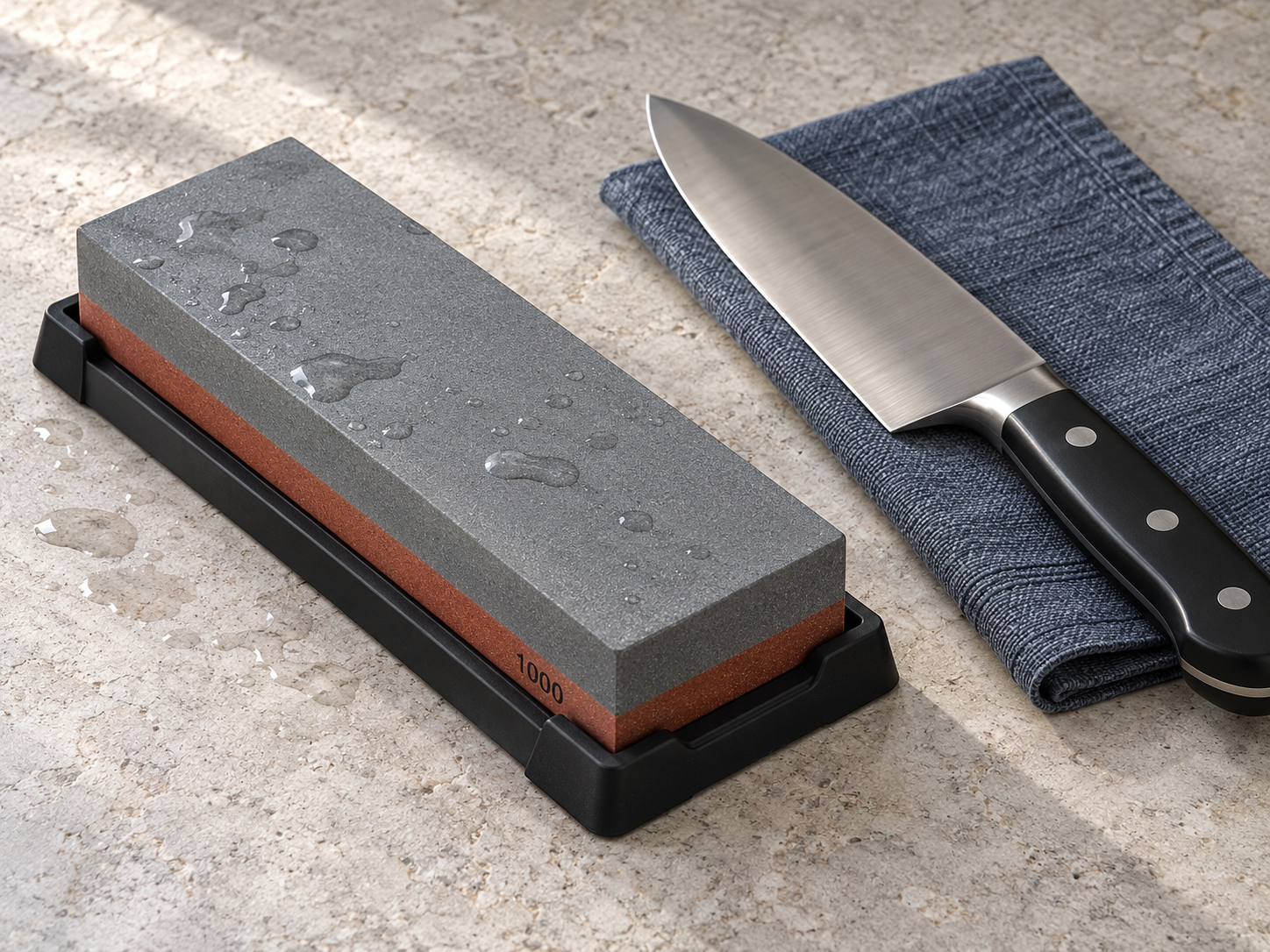
A sharpening stone suits a cook interested in caring for their knives, with the abrasive, size and supporting equipment chosen for the blades they own.
Ad: GiftAim earns commission or fees from qualifying purchases and sign-ups through links on this page, at no extra cost to you. How we’re funded.
Give the learning process as well as the stone
A sharpening stone is an invitation to learn a maintenance skill. It can suit someone who likes understanding their kitchen tools and wants to care for knives they already enjoy using. For a recipient seeking an immediate, effortless fix, the time and practice involved may make it a less welcome gift.
Ask about their knives first. Steel, blade shape and the maker's recommended method affect the choice; serrated, ceramic and specialist single-bevel blades should not be treated as ordinary kitchen knives. A chef's knife is a different purchase, not something to add automatically to a maintenance gift.
Start with a useful working surface
A long, wide bench stone gives room to control a blade, while a pocket-sized stone is a different tool. A secure nonslip holder or suitable stable base matters alongside the abrasive. Compare the actual stone dimensions rather than the size of the presentation box.
Waterstones and diamond plates have different preparation and care instructions. Some stones need soaking; others use a different wetting method. Follow the exact stone's instructions rather than soaking every abrasive. Find out whether flattening equipment is required to keep its working face suitable over time.
Make the first sessions realistic
A clear teaching guide or a lesson can be a more useful extra than several poorly explained stones. The knife maker's angle and method guidance matters; a supplied angle guide does not automatically suit every blade. A beginner can take time to keep the angle consistent without a promise of professional results.
Choose a modest, well-explained setup with a secure home for sharp tools. Keep the stone's care instructions and the knife's directions together. A birthday or Christmas gift can include an offer to learn alongside them, provided that is an activity they actually want.