 Image unavailable
Illustrative image — products may vary.
Insect Hotel: A closer look at the garden’s smaller visitors
An insect hotel offers small nesting or shelter spaces in a garden. Choose it for someone interested in observing local wildlife and willing to manage the habitat, rather than as a promise to fill the garden with bees.
Ad: GiftAim earns commission or fees from qualifying purchases and sign-ups through links on this page, at no extra cost to you. How we’re funded.
A habitat, not a guest list
An insect hotel can suit a gardener who likes noticing small wildlife and is happy to maintain a new feature. It offers spaces that some insects may use, depending on its design and the local species. It doesn’t supply a colony, guarantee visitors or replace suitable planting and habitat around it.
Look inside the compartments
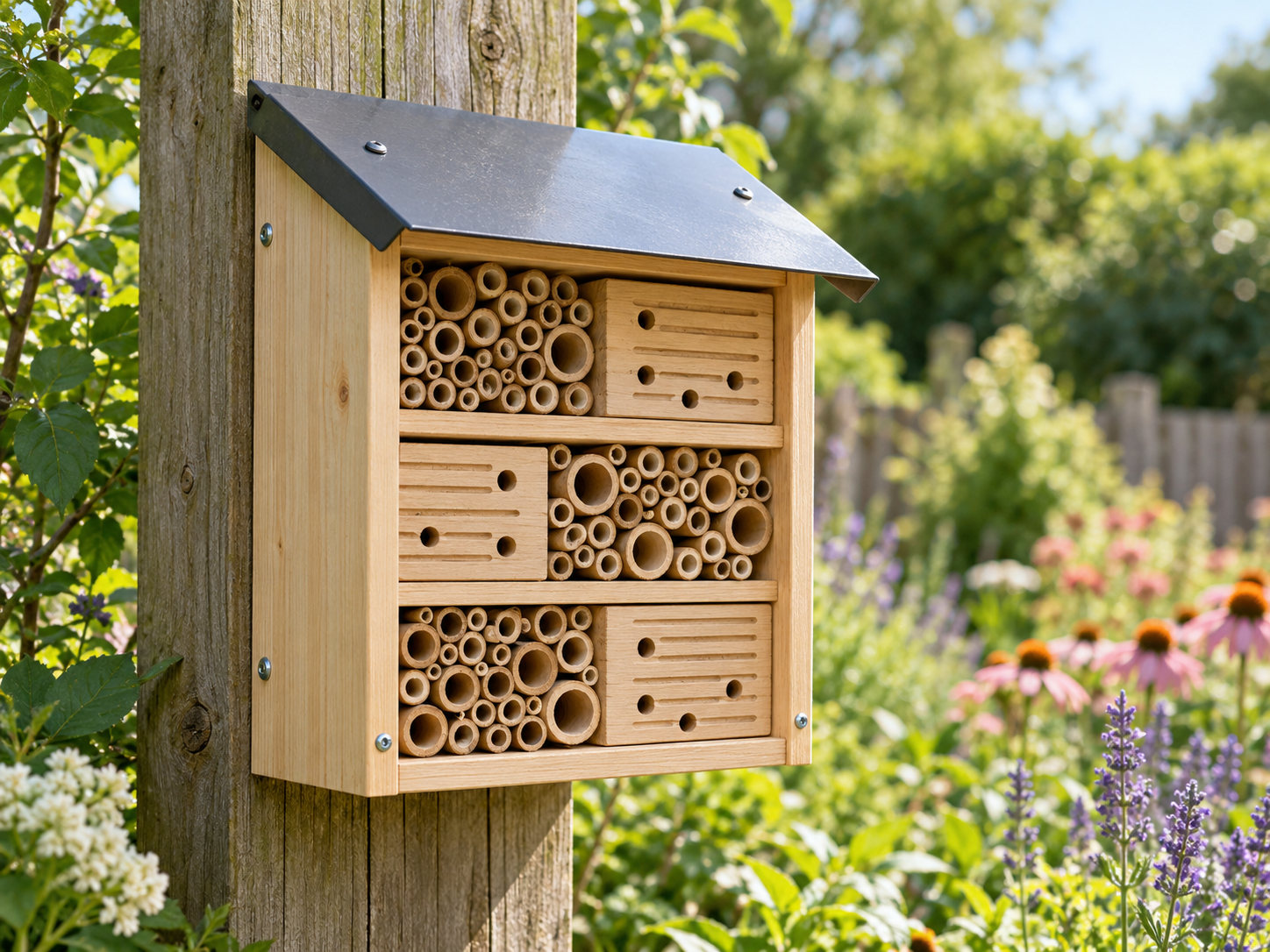
A mixed hotel and a nest designed for cavity-nesting solitary bees aren’t interchangeable. Decorative pinecones and a butterfly-shaped slot don’t establish useful nesting space for bees. For that purpose, look for smooth tunnel entrances, a protective roof and nest materials that can be inspected or replaced appropriately.
Read the actual dimensions and construction details. A large collection of inaccessible holes can create more upkeep than a smaller manageable nest. Avoid taking marketing lists of bees, butterflies and other insects as proof that every compartment serves them.
Choose the position with the recipient
The structure needs secure fixing, protection from weather and a position suited to the intended insects. A freely swinging decoration is a different object from a stable nesting site. Follow local wildlife guidance and the supplier’s directions instead of hanging it wherever a spare hook happens to be.
Find out how the owner should monitor and maintain the chosen design. Cleaning or replacing nesting material has to respect the insects’ life cycle; removing occupied tubes is not routine housekeeping. The appeal includes learning and observing, with no promise that a particular species will move in.
For a gardener more interested in birds, a bird nest box serves a different habitat need. Give an insect hotel for the recipient’s wildlife interest and care routine, rather than simply to fill a bare fence.