Give them a starting point, not a writing assignment
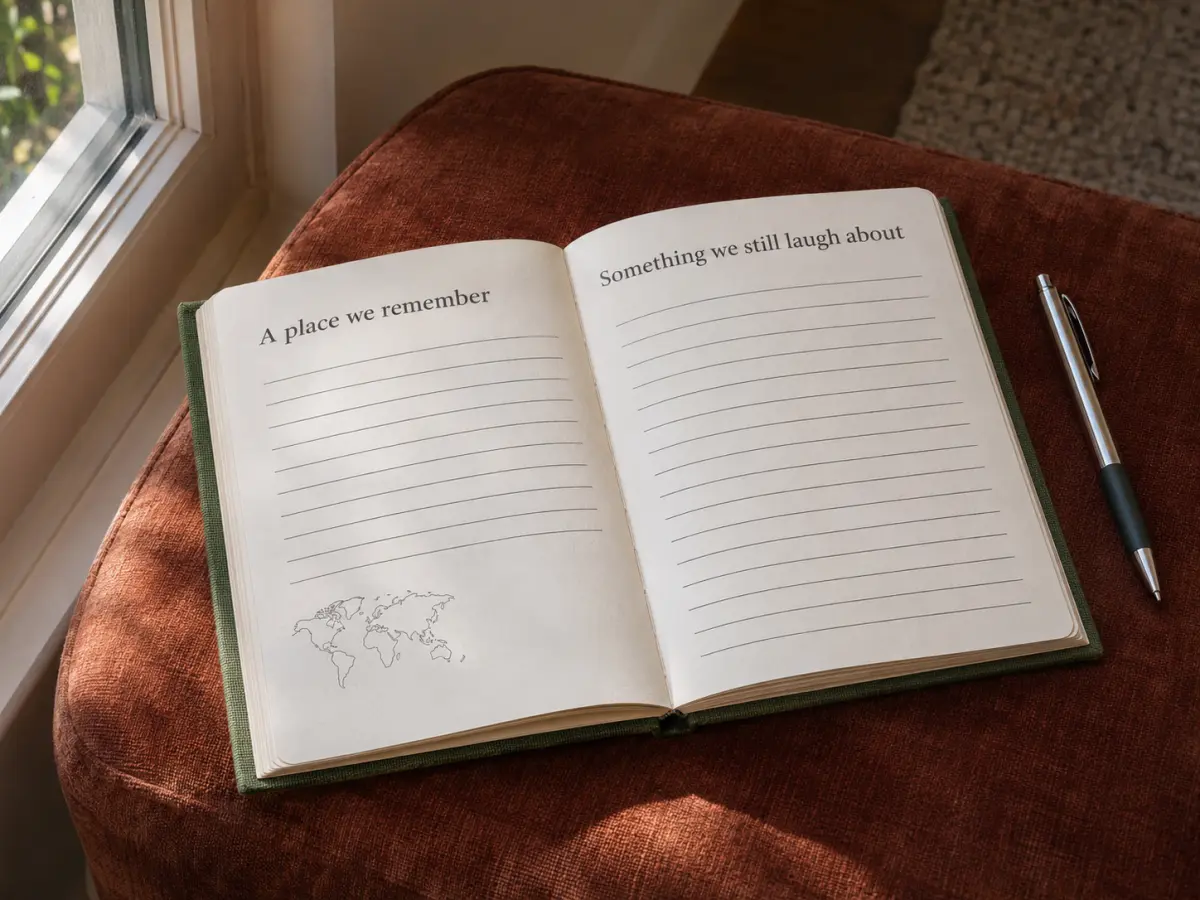
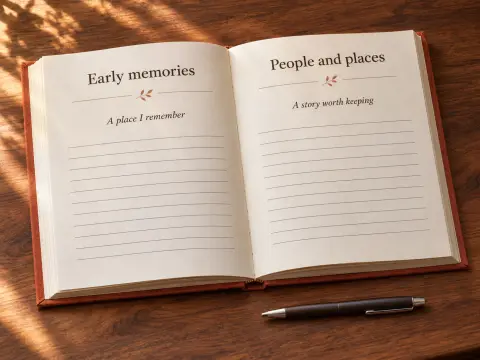
A familiar story can be surprisingly hard to put on a blank page. A guided memory journal offers a question to begin with: a place they remember, an ordinary habit or a moment that still makes them laugh. The gift is room for their own account, rather than a book that tells them what a relationship should look like.
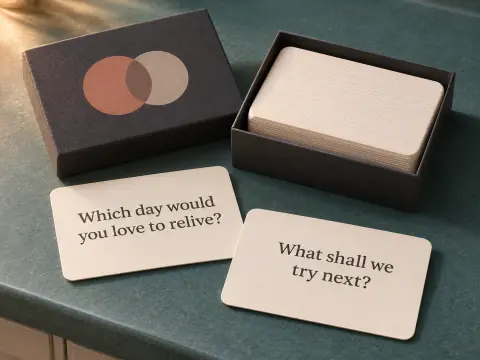
Read several sample prompts. Some books revisit a shared history; others are daily conversation exercises or wedding planners. Choose the questions before the cover. Family roles, intimate subjects and assumptions about children can make an otherwise attractive book the wrong present.
It should work from the year they are in
A couple celebrating a later anniversary does not need twenty-five years of homework. Look for open-ended sections they can dip into, or annual pages they can begin using now. A dated sequence may leave long empty stretches; decide whether that would bother them.
Compare print size and writing room with the way they like to write.
Look at whether the book opens comfortably and has space for both voices.
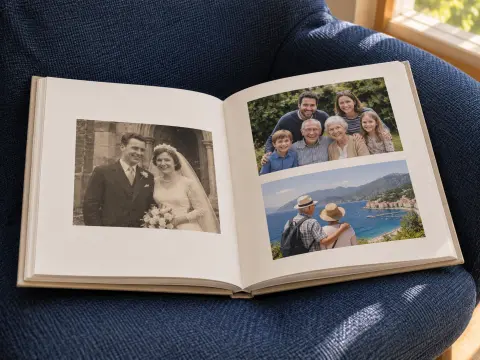
Distinguish printed photo spaces from pockets, and check whether photographs need separate printing.
Decide who starts the story
A partner might fill in a few memories before giving the book, provided its layout leaves space for the other person. Friends or relatives can give it blank, with no expectation that the finished answers will be shared. Either person should be free to skip a page or leave a subject private.
For one person’s whole life rather than a relationship, a life story journal is a different gift. A personalized photo book suits recipients who would rather receive the memories already gathered than write them down.